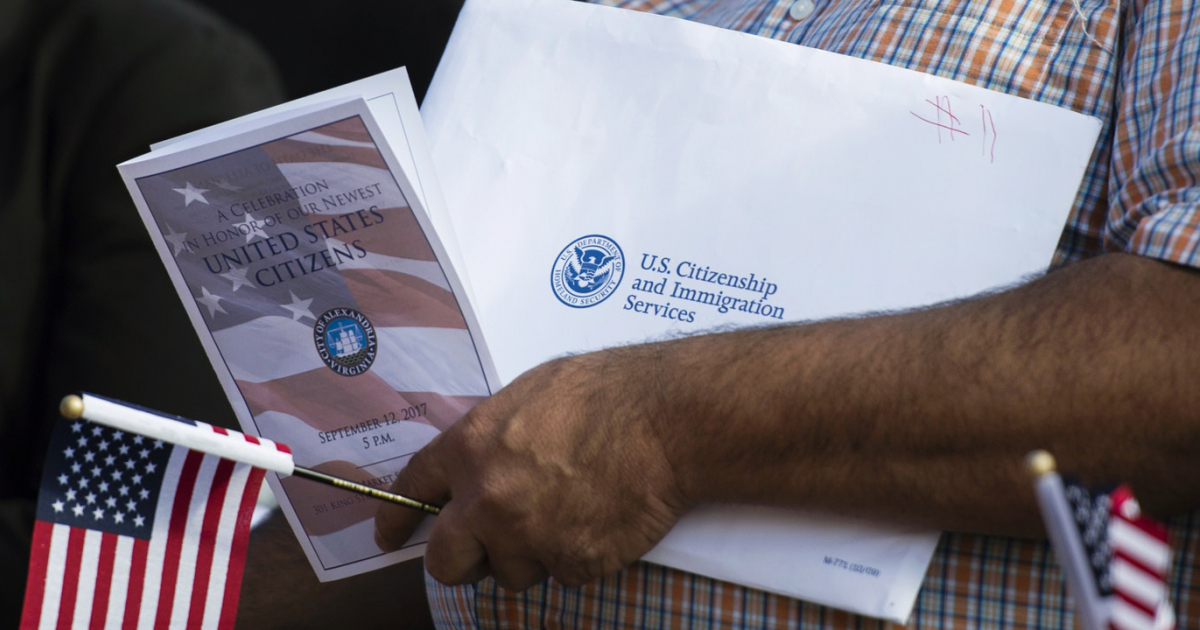
The United States Citizenship and Immigration Services (USCIS) has implemented higher fees for certain immigration benefits since July 17. This change directly impacts foreign nationals applying for Parole In Place (PIP) or conditional release under various categories. As a result, the fee waiver option for Form I-131, Application for Travel Document, Parole Documents, and Arrival/Departure Records is no longer available for specific categories. These include the initial request for arrival/departure records for those seeking PIP within the U.S., and applications to reinstate parole for individuals who previously held conditional release through the PIP program. Consequently, applicants in these categories now face a fee of $630 as outlined in the updated G-1055 form, which provides the current fee schedule for applications.
The prospect of these new fees was initially announced by USCIS on July 11, as part of the immigration policy reforms introduced by the Trump Administration under its "Big and Beautiful Law."
Significant Increase in Application Costs
Following the law's approval, attorney Wilfredo Allen cautioned viewers on CiberCuba about the soaring costs of immigration procedures. “Things are going to get very expensive!” he warned during his weekly program on Mondays at 11:00 a.m. in Miami, aired on the platform.
Allen explained that many individuals might lose their asylum applications due to prohibitive costs. “Previously, appeals were $110. Now they are $900. If your residency is denied or if you had any benefit with USCIS, the appeal costs $900,” he stated.
He further elaborated, “When you see appeals going from $110 to $900 each, you realize how costly things have become. The application for residency is now $1,500. If you're requesting any kind of waiver with the residency, the I-601 application is now $1,050. This applies when you are applying for residency but need to request a waiver for a minor offense.”
“We are talking about paying $2,550 to apply for residency. The I-246, often used to suspend deportation, is now $600. The 42A application, for requesting formal pardons for criminal offenses when one is a resident, has increased to $1,500, and reopening cases costs $5,200. If you notice, these are not massive cases in court. For instance, applying for parole costs $1,000, but that doesn't guarantee approval; it's just the application fee,” he emphasized.
Willy Allen also noted, “Applying for your initial asylum work permit is $550, and subsequent asylum work permits are $275. You can see that expenses have surged. Why? The intention is also to make things more challenging for immigrants. Almost everything you do now might allow you to request a fee waiver, but getting approval for such a waiver will also be quite difficult, as applying to not pay the fee doesn’t mean it will be granted.”
Understanding the Impact of Increased Immigration Fees
What categories are affected by the fee changes announced by USCIS?
The fee changes affect foreign nationals applying for Parole In Place (PIP) and conditional release under various categories. This includes the initial request for arrival/departure records for PIP within the U.S. and applications to reinstate parole for those previously granted conditional release under PIP.
How much is the fee for applying for residency after the changes?
The application fee for residency is now $1,500, but if a waiver is needed, such as the I-601 for minor offenses, the total cost can amount to $2,550.
Are there any fee reductions or waivers available under the new USCIS rules?
While there is a possibility to apply for fee waivers, getting approval for not paying the fees has become increasingly difficult, as applying does not guarantee that the waiver will be granted.