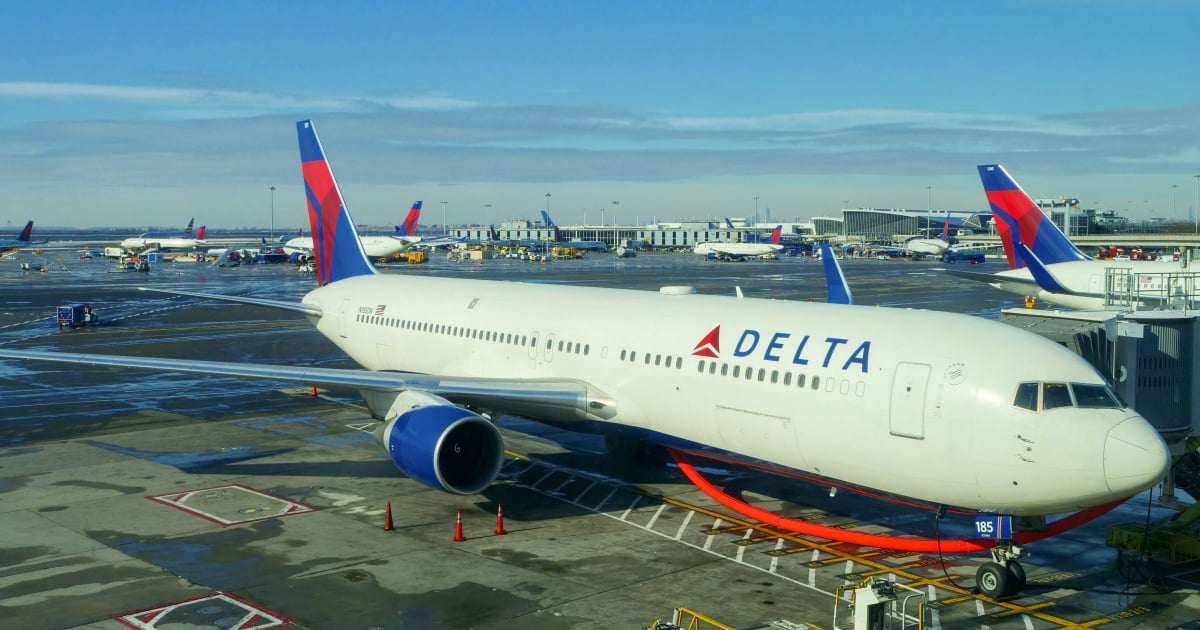
In a move that has stirred diplomatic tensions, former U.S. President Donald Trump has enforced new limitations on flights originating from Mexico. He also issued a warning about potentially dissolving the strategic alliance between Delta Air Lines and Aeroméxico. This decision is a direct reaction to Mexico's policies that restrict international air traffic at Mexico City's Benito Juárez International Airport.
The Associated Press (AP) revealed that Transportation Secretary Sean Duffy declared the forced relocation of airlines to the new Felipe Ángeles International Airport, located over 30 miles from Mexico City's center, as a breach of the bilateral aviation agreement between the two nations. This move allegedly provides unfair advantages to Mexican airlines.
"Joe Biden and Pete Buttigieg knowingly allowed Mexico to violate our aviation agreement," Duffy stated, criticizing the previous administration. "Today, that stops. Let these actions be a warning to any nation that believes it can exploit the United States, our airlines, and our market. America First means upholding the fundamental principle of fairness," he emphasized.
As part of the new measures, all Mexican airlines—whether commercial, cargo, or charter—are required to submit their schedules for review and obtain approval from the U.S. Department of Transportation. This will continue until the U.S. is satisfied with how Mexican authorities treat American carriers.
The partnership between Delta and Aeroméxico, established in 2016, has been under scrutiny by the U.S. government since the previous year. Both airlines argue that ending the agreement would disadvantage consumers, disrupt more than twenty routes, and jeopardize nearly $800 million in bilateral economic benefits.
"The Department of Transportation's proposal to terminate this strategic and pro-competitive alliance would significantly harm travelers, jobs, and communities in both the U.S. and Mexico," Delta asserted in a statement quoted by AP. Aeroméxico announced that it is assessing the directive and plans to issue a joint response with Delta in the coming days.
Nevertheless, the cancellation of the agreement would not take effect until October. It is projected that the loss of direct flights could deter over 140,000 American tourists and around 90,000 Mexicans, leading to adverse consequences for tourism and the economy in both countries.
Implications of U.S.-Mexico Aviation Dispute
What are the new restrictions on flights from Mexico?
The U.S. has imposed limitations on flights from Mexico, requiring all Mexican airlines to submit their flight schedules for review and approval by the U.S. Department of Transportation.
Why is the Delta-Aeroméxico alliance under threat?
The alliance is threatened due to U.S. allegations that Mexico's aviation policies violate a bilateral agreement, thus giving Mexican airlines unfair advantages.
How could these actions impact tourism and economies?
The potential cancellation of direct flights is expected to discourage over 140,000 American tourists and approximately 90,000 Mexican travelers, negatively affecting tourism and economic conditions in both countries.