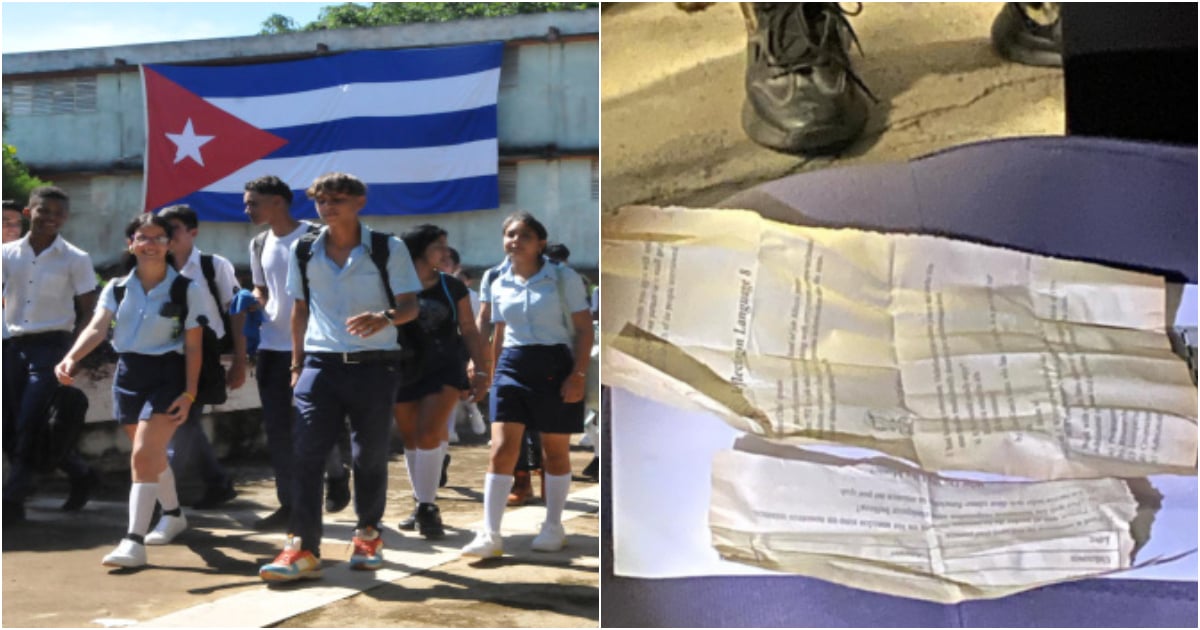
An entire family has come under scrutiny in a major criminal investigation in Cienfuegos after being linked to a synthetic drug distribution network that ensnared numerous young individuals, including minors. Among the six individuals implicated (two men and two women), four are relatives, including a 16-year-old girl, who were involved in selling a drug referred to as "papelito," according to the official newspaper 5 de Septiembre.
Drug Operations in Cienfuegos
These family members sold the drugs both from their home and in the streets. While they refrained from using the drugs themselves, they encouraged others to partake, reaping profits from a trade that destroys lives, explained First Lieutenant Ana Diasmyn Díaz Hernández, a criminal investigator with the Provincial Criminal Investigations Unit.
Criminal experts identified the substances as being laced with 5-FLUORO ADB, a highly toxic synthetic cannabinoid. This compound can cause severe health issues, such as seizures, strokes, and multiple organ failure.
Deceptive Distribution Methods
The medium used for transporting and distributing these dangerous drugs was ordinary school notebook paper, seemingly harmless but saturated with thousands of lethal doses. The network unravelled when one of the accused was intercepted returning from Havana with the drugs hidden in a taxi, awaited by a Ministry of the Interior (MININT) team. Although the investigation is ongoing, the accused face charges under Article 235.1a of the Penal Code, concerning drug trafficking offenses.
Impact on Cienfuegos Youth
The authorities have identified at least 20 young consumers involved, four of whom are minors aged between 15 and 17. Most have dropped out of school, lack employment, and quickly fell into addiction, as reported by local media. The younger users consumed three to four doses in one night, while older ones took even more, leading to severe dependency with symptoms like tremors and irritability if deprived of the drug.
Major Annia María Gil Rodríguez of the MININT highlighted that many consumers turned into distributors, exacerbating the problem and extending the damage's reach. She also noted the inaction of some family members who suspected the trafficking but did not intervene.
Drug-related activities were identified in the Centro Histórico, La Juanita, La Gloria, and San Lázaro areas of Cienfuegos. Despite the government's "zero tolerance" policy towards drug-related crimes, the societal decay seems to be escalating unchecked.
Escalating Drug Concerns Across Cuba
Two sheets of school notebook paper were enough to reveal the depths of this domestic nightmare when impunity takes root at home. Cuban Customs authorities reported on Friday detecting liquid narcotics within a man's body at Havana's José Martí International Airport amidst the regime's anti-drug campaign.
Customs agents recently thwarted attempts to smuggle personal-use drugs disguised as gummies and e-cigarettes at Jardines del Rey International Airport, a tourist hotspot in Cayo Coco. Throughout 2023 and into early 2024, there has been a noted increase in the sophistication of smuggling methods, with marijuana, cocaine, synthetic cannabinoids, and methamphetamines being the most frequently detected substances.
The regime's intensified measures against drug trafficking have led to bolstered security and specialized technology at key entry points nationwide. Increasingly, videos shared on social media depict the troubling decline of young individuals under the influence of "el químico," heightening societal alarm over synthetic drug use in Cuban communities.
Although authorities have conducted raids and arrests related to this substance's trafficking, accessibility remains high due to its low cost and ease of distribution in schools, peripheral neighborhoods, and informal networks. At the end of June, the Cuban government launched its Third National Exercise on crime prevention and combating corruption, drugs, and social indiscipline, which included community surveillance, fiscal audits, energy inspections, and public trials for high-profile cases, including drug trafficking.
Official media reported numerous trials, harsh sentences, and public shaming. However, beyond the official narrative, there is little discussion on why more people—primarily the young—risk involvement in these activities. Amidst ongoing crisis, inflation, and scarcity, punitive approaches seem to amplify the issue's visibility rather than curbing it.
Drug Trafficking and Youth in Cienfuegos: Key Questions
What substances were involved in the Cienfuegos drug trafficking case?
The substances involved were synthetic drugs laced with 5-FLUORO ADB, a highly toxic synthetic cannabinoid.
How were the drugs distributed in Cienfuegos?
The drugs were distributed using school notebook paper, a deceptive method that masked thousands of lethal doses.
What impact did the drug network have on Cienfuegos' youth?
The drug network led to at least 20 young individuals becoming addicted, causing many to drop out of school and develop strong dependencies.
What actions have authorities taken against drug trafficking in Cuba?
Authorities have intensified security measures, conducted public trials, and imposed harsh sentences to combat drug trafficking in Cuba.