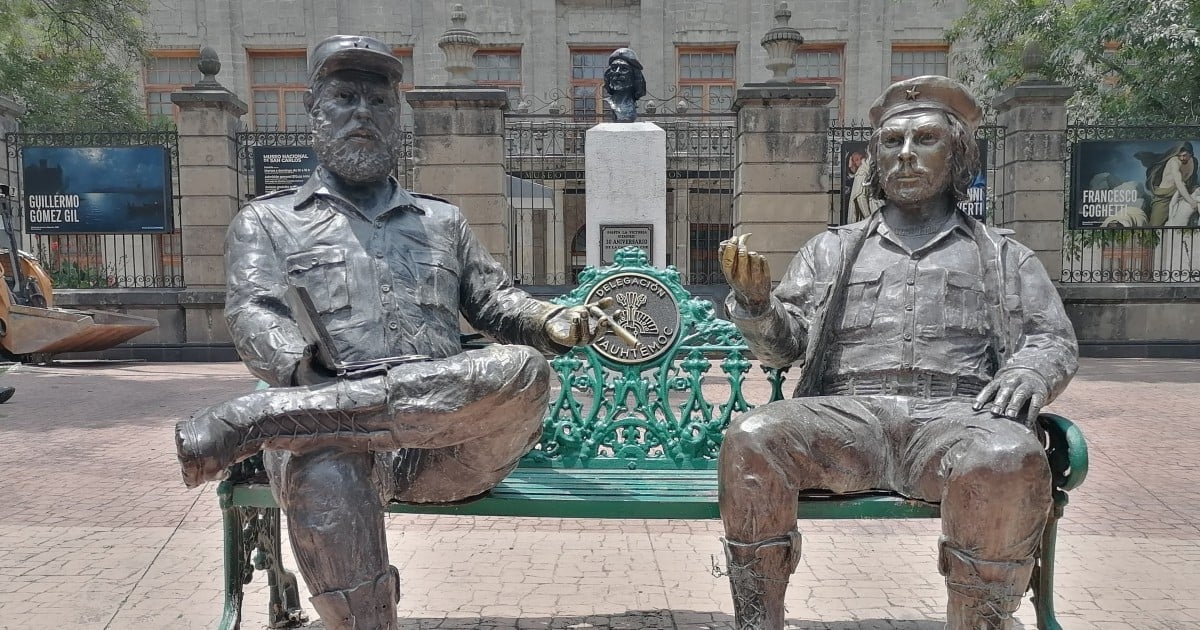
Controversy surrounding the statues of Fidel Castro and Ernesto "Che" Guevara in Mexico City's Tabacalera Park has intensified, following a proposal by Cuauhtémoc Mayor Alessandra Rojo de la Vega to auction off the removed sculptures. She suggested that admirers of these figures should purchase them with their own money.
In a video shared on her social media account, the mayor humorously addressed the admiration some Mexican sectors have for the Cuban dictator and the Argentine guerrilla. She stated that those who idolize them now have the chance to "take home" a piece of the legacy they champion. "To the closet communists and dictator collectors, I bring you a unique opportunity. Why not officially auction the statues of Fidel Castro and Che Guevara? But this time, you need to pay for it yourselves. Not the people, not with taxes, not with our public spaces. With your money," declared Rojo de la Vega.
Community Support and Opposition
This suggestion comes shortly after the official removal of the statues on July 17, a move that responded to a longstanding demand from residents of the Tabacalera neighborhood. According to the mayor, these residents have called for the restoration of public spaces free from symbols of dictatorships.
Rojo de la Vega defended the action as aligning with democratic values and human rights, emphasizing that both Castro and Guevara "preached freedom but silenced with bullets." She also asserted that Castro and Che Guevara "do not represent the Cuban people," and praised the courage to amend past positions.
Reactions and Historical Context
The proposal to auction the statues has elicited mixed reactions. Some view it as a provocation, while others see it as a symbolic gesture compelling those who glorify authoritarian figures to do so without public funds.
The Cuban opposition community in Mexico has voiced its support for the mayor. Journalist José Raúl Gallego pointed out that events defending the statues have been organized by the Association of Cubans Residing in Mexico, a group linked to the Cuban embassy accused of harassing dissidents.
Future of the Statues
Reports have documented how the Mexican Movement of Solidarity with Cuba and related groups have employed repressive tactics in Mexico to silence critics of the Cuban regime. From digital harassment to institutional pressure and boycotts, complaints indicate an organized network of surveillance and censorship.
Meanwhile, the statues of Castro and Guevara remain out of public view, and their fate is yet to be decided. On Thursday, Mexican President Claudia Sheinbaum suggested that the figures might be relocated, considering them part of a "historical moment" connected to the shared history between Cuba and Mexico.
Frequently Asked Questions about the Statue Controversy
Why were the statues of Castro and Guevara removed?
The statues were removed following a demand from local residents who wanted their public spaces free from symbols associated with dictatorships.
What is the mayor's proposal regarding the statues?
Mayor Alessandra Rojo de la Vega proposed auctioning the statues, allowing those who venerate these figures to purchase them with their own funds.
What has been the reaction to the proposed auction?
The reaction has been mixed; some see it as provocative, while others view it as a symbolic move to prevent the use of public resources for glorifying authoritarian figures.