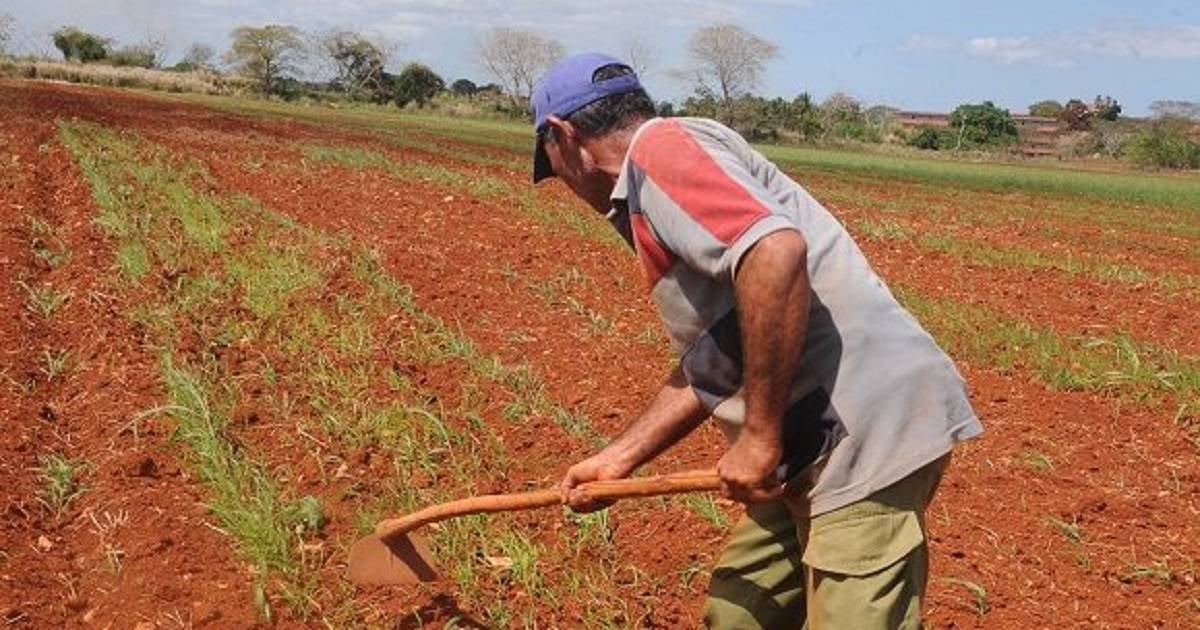
Amidst a chronic shortage of fertilizers, plummeting crop yields, and an agricultural system on the brink of collapse, Cuban authorities are touting Russian nanosilicon as a near-miraculous solution. However, there is a lack of public studies, proven results under local conditions, or a clear implementation plan. Dmitry Chernyy, a representative of the Ministry of Agriculture at the Russian Embassy in Cuba, introduced the product at the José Martí Grain Agroindustrial Company in Candelaria, Artemisa, as reported by the official newspaper El artemiseño.
Official accounts describe nanosilicon as a mineral-based liquid fertilizer, containing biologically active silicon and microelements, which purportedly have significant positive effects on plant growth and development, thereby enhancing yields and product quality. Nevertheless, beyond these general statements, no technical evidence, field results, or trials on Cuban soil were provided to substantiate these claims.
A Promising Yet Unproven Solution
During the presentation, farmers and officials received catalogs and sample products "on consignment," described as a "fruitful" exchange. Some producers expressed "joy and surprise" at having access to a bioproduct that could be delivered via small packages and air transport at "affordable prices." Yet, this strategy highlights improvisation: a supposedly "environmentally friendly" fertilizer to boost Cuba's agricultural output is being imported in small bottles without logistical infrastructure or supply security.
The urgent search for magical solutions stems from an alarming context. Cuban agriculture is in a deep crisis due to a lack of inputs, deteriorating infrastructure, ineffective centralization, and a labor force exodus. The fields are not producing enough, state markets are empty, and fertilizer imports have plummeted to minimal levels.
The Reality Behind the "Miracle" Solution
The introduction of nanosilicon emerges as the latest promise. However, rather than pursuing a serious redesign of agricultural policies, the government clings to the narrative of "solidarity," presenting a foreign sample as if it were a national plan. There is no information on the actual import cost, long-term environmental impact, or its compatibility with key crops for food security.
Authorities attempt to disguise scarcity as opportunity by distributing samples and catalogs to desperate producers, without guaranteeing results, real access, or quality control. The promotion of this Russian bioproduct aligns with the official tendency to import temporary fixes while structural agricultural problems remain unresolved.
Ongoing Food Crisis in Cuba
As Cuban fields crack due to nutrient deficiency, the proposed solution is neither productive sovereignty nor national science, but rather a foreign bottle filled with promises yet to materialize. In the face of fertilizer shortages, official media have even suggested using urine as a fertilizer alternative to chemical fertilizers, an "alternative solution" to contribute to the elusive "food sovereignty" the government claims to pursue.
In October 2018, the official newspaper 5 de Septiembre announced the construction of the country's largest fertilizer factory in Cienfuegos, a joint venture with an Indian company, slated to produce 300,000 tons annually, with production expected to start by the end of that year.
Cuba is experiencing one of the worst food crises in decades, marked by chronic shortages, a decline in national agricultural production, and an almost total dependency on imports that the country can no longer afford. The scarcity of basic goods like rice, milk, flour, or oil has turned daily meals into a constant struggle for millions of Cubans.
Long lines, empty markets, and the disproportionate price increases of food in the informal sector are part of daily life for a population surviving on wages that cover less than a quarter of the basic basket. The causes of this emergency are numerous: the structural inefficiency of the state agricultural system, lack of inputs and fuel, the dollarization of many essential products, and the dramatic drop in national production.
Furthermore, the impact of U.S. embargo sanctions, natural disasters, and the absence of deep, comprehensive reforms in the agricultural system exacerbate the situation. Meanwhile, the worsening energy crisis has left a trail of losses in crops like tobacco and is a factor in the decline of milk production.
Pinar del Río exemplifies the national situation. Recently, the Communist Party of Cuba (PCC) Plenum confirmed that the province has over 19,000 hectares (ha) of idle land, coexisting with empty markets, a population suffering from chronic shortages, and municipal self-supply efforts that have yet to take off—a diagnosis that is no longer surprising.
Although more than 50,000 ha were distributed in the past two years, this did not translate into a significant production increase due to bureaucratic hurdles and a lack of real incentives, as admitted by the local Agriculture delegate, Yoel Hernández.
Frequently Asked Questions on Nanosilicon and Cuba's Agricultural Challenges
What is Russian nanosilicon?
Russian nanosilicon is described as a mineral-based liquid fertilizer, containing biologically active silicon and microelements, which is claimed to boost plant growth and productivity.
Why is Cuba interested in Russian nanosilicon?
Cuba is facing a severe agricultural crisis with a chronic shortage of fertilizers and declining crop yields. The government sees Russian nanosilicon as a potential solution to these pressing issues.
What are the challenges facing Cuba's agricultural sector?
Cuba's agricultural sector is plagued by structural inefficiency, lack of inputs, deteriorating infrastructure, centralization issues, labor shortages, and external factors like U.S. embargo sanctions and natural disasters.
What is the current state of food security in Cuba?
Cuba is experiencing a severe food crisis, characterized by shortages of basic goods, dependency on costly imports, and inadequate national agricultural production, which leads to daily struggles for the population.