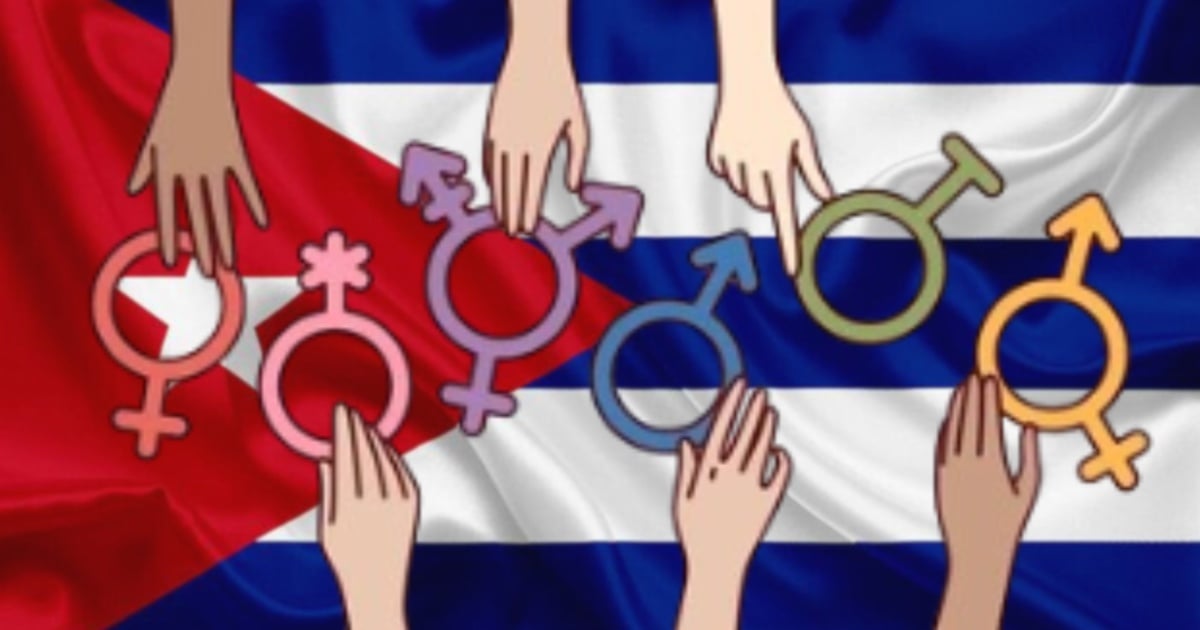
On Friday, the Cuban Parliament gave the green light to the Civil Registry Law, a comprehensive regulation that permits individuals to change their gender identity upon personal request. This modern legislation aims to overhaul the legal framework concerning identification and certification of civil status matters in the country. According to the regime, the law is designed to "enhance" the civil registry's operations within Cuba.
The new Civil Registry Law introduces a set of rights and responsibilities for individuals, with one of its most groundbreaking features being the inclusion of gender changes and identity modifications. The legislation also addresses the free selection of one's name, albeit with restrictions to prevent dignity violations, errors, or associations with well-known trademarks. Moreover, it covers name and surname changes and agreements on the order of surnames. The law also acknowledges the intersex condition of newborns.
Justice Minister Oscar Manuel Silvera Martínez expressed that this law will "strengthen" the institution, which operates through 334 interconnected offices nationwide and is the sole justice system activity that continues during exceptional circumstances. The bill identifies key principles for the registry system, such as legality, legal security, immediacy, universality, free services, administrative efficiency, and personal data protection.
Additionally, the law incorporates gender perspective, focuses on vulnerable individuals, and respects the progressive autonomy of children and adolescents. One of its significant aspects is the functional reorganization of the civil registry system, placing it directly under the Ministry of Justice as the governing body, with a national, provincial, and municipal structure. A Central Civil Registry will be established, featuring a national digital database. The law envisions gradually replacing paper records with electronic ones, using certified digital signatures, and creating a unique folio per individual to chronologically document registry acts.
Digital methods for correcting and amending errors are also introduced. Other noteworthy elements include removing instrumental witnesses in marriage ceremonies and recognizing acts not traditionally linked to civil status, such as cohabitation agreements and varying degrees of support.
According to Cubadebate, the civil registry is envisioned as an essential and free public service with a nationwide automated system. This will streamline the registration, consultation, and issuance of vital records like birth, marriage, common-law union, divorce, death, adoption, name or surname corrections, and gender identity changes.
The Supreme People's Court will maintain oversight over registral acts with legal implications. Despite this new "perspective," it starkly contrasts with the regime's past, which persecuted homosexual and transgender individuals, notably during Fidel Castro's era. Historically, the Cuban regime has been oppressive towards the LGBTIQ+ community. Under Fidel Castro’s leadership, labor camps known as UMAP were established, where thousands of young homosexuals and "deviants" were confined. This past sharply contrasts with current efforts to improve the regime's image by portraying itself as a defender of LGBTIQ+ rights.
Understanding Cuba's New Civil Registry Law
What are the key features of Cuba's new Civil Registry Law?
The law allows for personal gender identity changes, includes a catalog of rights and duties, covers name changes, and reorganizes the civil registry system under the Ministry of Justice. It also introduces digital recordkeeping and eliminates certain traditional procedures like instrumental witnesses in marriages.
How does the new law address gender and intersex issues?
The law allows individuals to change their gender identity through a personal request and acknowledges the intersex condition of newborns, reflecting a more inclusive approach to gender issues.
What historical contradictions does this law highlight?
The law contrasts with Cuba's repressive past towards the LGBTIQ+ community, particularly during Fidel Castro’s rule, when homosexuals were persecuted and sent to labor camps. The new law's inclusive stance is a sharp deviation from these historical practices.