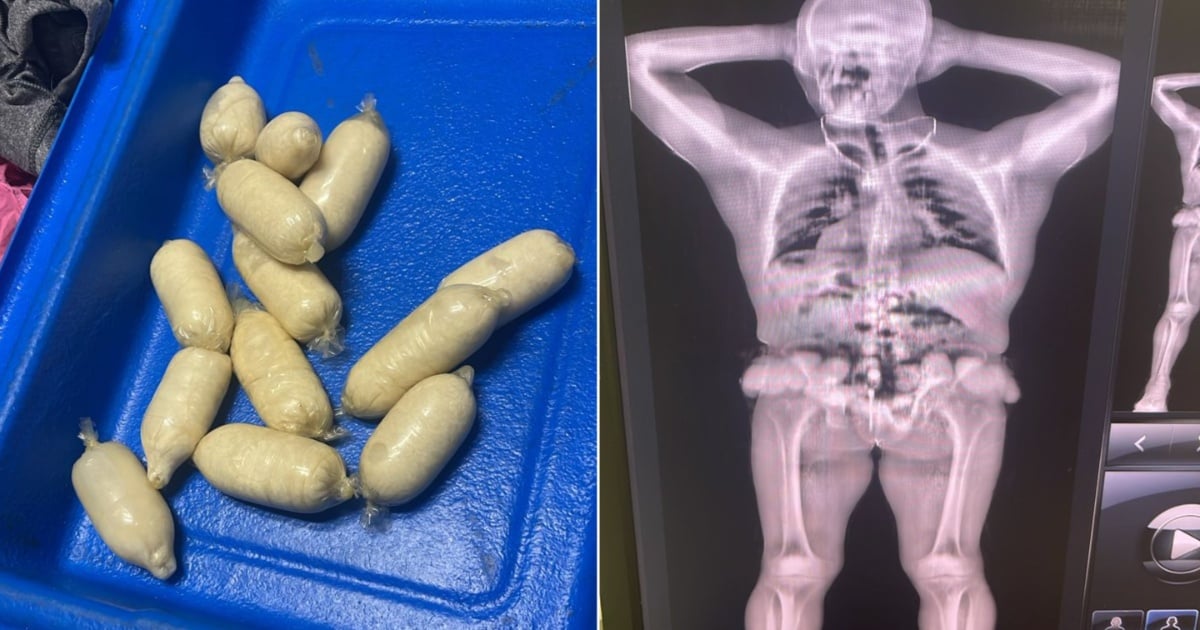
On Friday, Cuban Customs authorities revealed the discovery of liquid narcotics concealed within a man's body at Havana's José Martí International Airport amid the regime's ongoing crackdown on drugs. William Pérez González, the Deputy Head of Customs, confirmed that the passenger attempted to evade security checks by hiding liquid cocaine capsules encased in condoms. The man's identity remains undisclosed.
The detained individual is currently in the custody of relevant authorities who have launched a thorough investigation to uncover further details of the incident. This case adds to a series of recent reports where Cuban officials have identified various drug trafficking methods, including swallowed capsules, disguised containers in luggage, and narcotics hidden in personal items.
Authorities have observed a rising trend in the use of liquid drug forms, posing an additional challenge for inspection systems. Pérez González previously emphasized that enhancing airport surveillance is critical to preventing the entry of drugs into the island. While acknowledging traffickers' inventive "camouflage techniques," he assured that Cuba's Customs maintains a robust border shield and continuously trains its personnel.
The regime's battle against drug trafficking has led to bolstered security measures and the deployment of specialized technology at major entry points to the country. Officials reiterate their "zero tolerance" stance on narcotics and caution the public about the legal and penal consequences of such offenses.
Last week, Customs detected drugs hidden in gummies and electronic cigarettes at Jardines del Rey International Airport, thanks to routine checks and canine units. Traffickers have resorted to concealing drugs in gummies, electronic cigarettes, beverages, disposable diapers, rechargeable bulbs, and secret compartments in suitcases to bypass customs controls.
Frequently Asked Questions on Drug Trafficking at Cuban Airports
What methods are traffickers using to smuggle drugs into Cuba?
Traffickers are employing various methods to smuggle drugs into Cuba, including swallowing capsules, hiding them in luggage, disguising them as personal items, and using liquid forms concealed in condoms.
How are Cuban authorities responding to the increase in drug trafficking?
Cuban authorities are strengthening their security measures, utilizing specialized technology, and enhancing surveillance at major entry points. They also conduct routine checks and employ canine units to detect drugs.