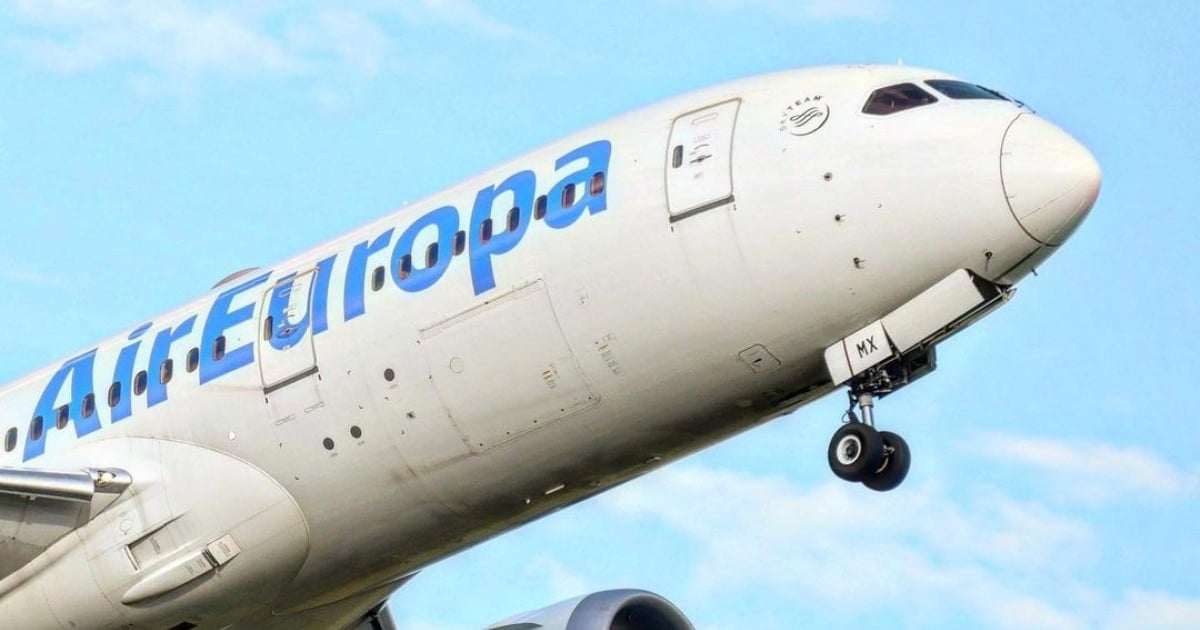
Earlier this week, specifically on Tuesday, an Air Europa flight en route from Madrid to Havana was compelled to return to Adolfo Suárez Madrid-Barajas Airport following an incident shortly after takeoff. The return was not initiated until the aircraft was already over the Atlantic Ocean. As a result, operations on one of Madrid airport's runways were temporarily halted.
The aircraft, a Boeing 787 Dreamliner, was cruising over the Atlantic when the crew decided to head back as a precautionary measure. According to Air Traffic Controllers on their official social media account, the incident was caused by a bird strike during takeoff. "The crew of the flight from #Madrid to Cuba informed us of a bird strike on takeoff. Upon entering Portuguese airspace, they chose to return as a precaution," the controllers reported, adding that the situation was handled smoothly.
"We directed them for a direct approach to runway 32L, where they landed and cleared the runway without issues. Meanwhile, we diverted all other traffic to 32R until the situation was resolved and the runway inspected. Operations are now running with parallel runways," they continued.
The incident was widely reported on Thursday by aviation-focused news portals like Preferente and Reportur. Real-time flight tracker Flightradar24 confirmed that the plane turned around shortly after crossing the Atlantic Ocean.
These sources did not provide further details on how the Havana-bound flight was eventually completed.
Bird Strikes: A Common Aviation Hazard
While such occurrences can be unsettling for passengers, bird strikes are relatively common in commercial aviation and rarely result in serious consequences. They typically occur during takeoff or landing phases when aircraft operate at lower altitudes, intersecting with the natural habitats of many birds.
Airlines and airports have established safety protocols for these situations, which include subsequent technical inspections and immediate operational adjustments, as demonstrated by this Air Europa flight. The primary concern, as in this case, is always the safety of passengers and crew.
Air Europa's Longstanding Connection with Cuba
Founded in 1984 under the commercial name Air España, Air Europa conducted its inaugural flight in November 1986. Over the years, it has emerged as a leader in both European and transoceanic routes, integrating Boeing 757 and 767 aircraft in the 1990s and expanding into Latin American destinations.
Today, Air Europa is part of the Globalia group and operates a modern fleet of over 50 aircraft, including the Boeing 787 Dreamliner. As a member of the SkyTeam alliance, it offers connections to more than 1,000 international routes. Air Europa has maintained regular flights to Havana for over two decades, solidifying its role as a key player in air travel between Spain and the island.
Since the summer of 2025, the airline has been operating daily flights on the Madrid-Havana route, increasing its presence with seven weekly flights during peak season, up from the previous six weekly flights.
Understanding Bird Strikes and Their Impact on Aviation
What is a bird strike in aviation?
A bird strike occurs when an aircraft collides with one or more birds during flight, typically during takeoff or landing phases when aircraft fly at lower altitudes.
How do airlines manage bird strikes?
Airlines and airports have established protocols, including technical inspections and operational changes, to ensure safety after a bird strike. The priority is always the safety of passengers and crew.
Are bird strikes dangerous for airplanes?
While bird strikes can be unsettling, they are relatively common and rarely result in serious consequences due to established safety protocols and aircraft design resilience.