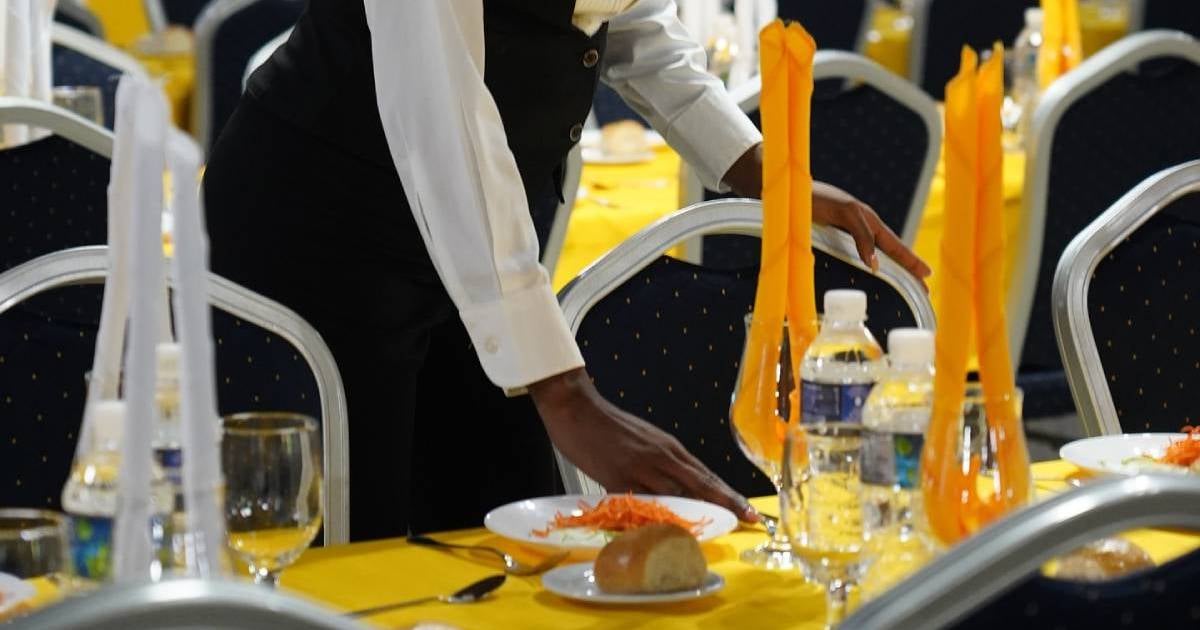
Recent photos posted by the PALCO Business Group on Facebook have stirred up controversy by showcasing the culinary services provided during the sessions of the National Assembly of People's Power at Havana's Palace of Conventions. The images highlight a stark disconnect between the government and the food shortages experienced by the Cuban populace. As most Cubans struggle daily to put food on their tables, the regime's deputies enjoy refined menus that have sparked outrage.
Although not gourmet, the meals served to these deputies stand in sharp contrast to what ordinary citizens consume daily in their homes. The pictures reveal cold macaroni salad, vegetable salads featuring carrots and cucumbers, fried potatoes, soft bread with a golden crust, and even Cuban cake. However, the photographs strategically omit any main courses. The absence of any meat dishes suggests a calculated move by the regime to avoid backlash in a country where the shortage of basic foods has turned meals into a luxury.
The dining hall, part of a restaurant within the Palace of Conventions, is set up with banquet-style table arrangements. Accompanying the images is a message that reads: “Commitment, dedication, and professionalism,” allegedly in tribute to the PALCO staff hosting the deputies. Yet, instead of admiration, this display of delicacies has ignited a storm of criticism. In a nation where thousands subsist on plain rice or a single egg per day, the disparity is offensive.
The timing of PALCO's post and its gastronomic showcase coincides with a recent uproar involving former Minister of Labor and Social Security, Marta Elena Feitó. On Monday, she denied the existence of beggars in Cuba during a parliamentary session, an attempt widely seen as an ill-fated effort to conceal the island's poverty and hunger. Her statement was met with applause from deputies, but once the images hit social media, the scandal erupted. The public outcry was so intense that within 24 hours, Feitó resigned from her position.
According to some online commentators, the photos of the parliamentary feast serve as a visual explanation for the deputies' enthusiastic applause at every official report. “Full bellies, empty consciences,” remarked journalist Mario J. Pentón on social media.
Amid one of the worst food crises in Cuba's history, the Palace of Conventions appears to be a gastronomic oasis for the political elite. Meanwhile, millions of Cubans continue queuing for food, eating whatever they can find, and surviving on remittances or bartering, as wages are insufficient to feed their families.
Cuban Political Elite and Food Disparities
What types of food are served to Cuban deputies at the Palace of Conventions?
The deputies are served meals featuring cold macaroni salad, vegetable salads with carrots and cucumbers, fried potatoes, soft bread, and Cuban cake, though main courses like meat are not shown in the photos.
Why has the food served to Cuban deputies caused controversy?
The contrast between the deputies' meals and the daily reality of food scarcity faced by the general Cuban population has sparked outrage, highlighting the government's disconnect from the struggles of ordinary citizens.
What was the reaction to Marta Elena Feitó's statement about beggars in Cuba?
Her denial of the existence of beggars in Cuba was met with applause by deputies, but it led to a public uproar once images of the deputies' meals were shared online, resulting in her resignation shortly after.