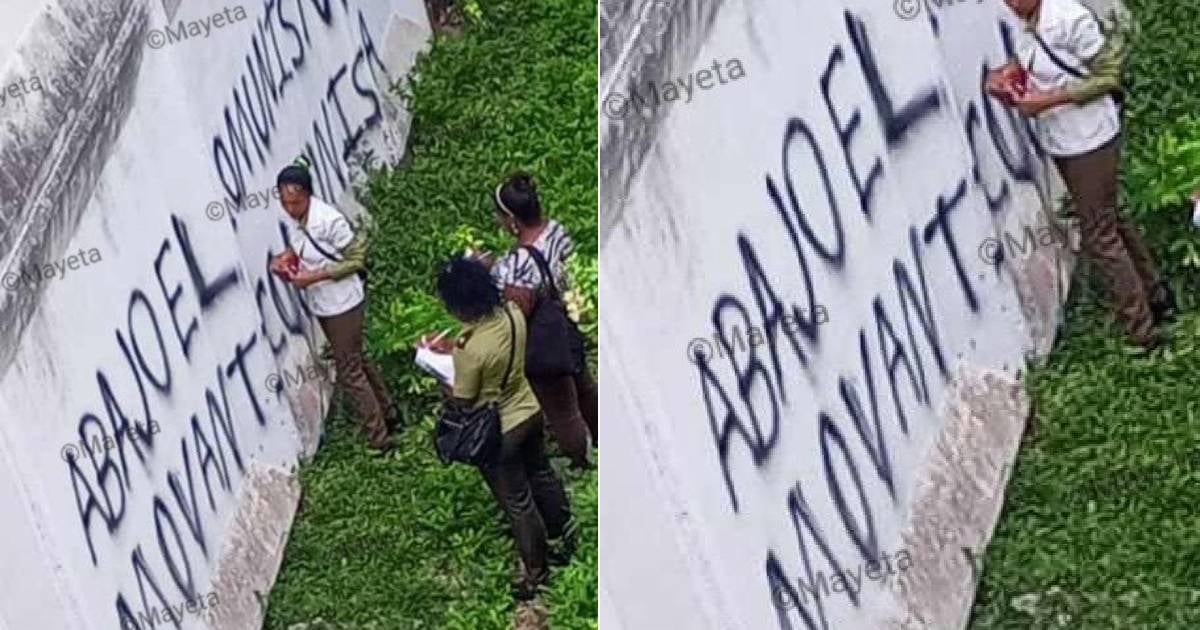
A massive mural with the phrase "DOWN WITH COMMUNISM," signed by the Anti-Communist Movement, emerged on a wall in Santiago de Cuba, prompting a swift crackdown by authorities. This act is part of an initiative called "Paint Your Little Piece," where local activists aim to make their rejection of Cuba's political system visible through bold statements in public spaces.
Journalist Yosmany Mayeta Labrada reported that agents from the Technical Investigations Department (DTI) arrived at the scene to examine the graffiti, document it, and immediately erase it. The authorities deem the message "subversive," and several individuals have faced years-long prison sentences for similar anti-regime graffiti.
Such actions have become increasingly common in the eastern part of the country, amid rising social unrest due to the energy crisis, inflation, and political repression. This incident arises during one of the most challenging times for the Cuban government, which is confronting silent protests, digital activism, and artistic expressions aimed at defying the official narrative.
Last June, "Paint Your Little Piece" evolved from a satirical nod on social media into a genuine street protest movement across Cuba. In various locations on the island, including San Antonio de los Baños (Artemisa) and Caimito, new signs with direct messages opposing the communist regime appeared, challenging fear, surveillance, and repression.
In Havana, one graffiti succinctly captured public discontent with the phrase "Raúl singao."
Understanding the Anti-Communist Movement in Cuba
What is the "Paint Your Little Piece" initiative?
"Paint Your Little Piece" is a protest movement in Cuba where activists use public spaces to display messages opposing the political system, aiming to increase visibility and awareness of their dissent.
Why are anti-communist messages considered subversive in Cuba?
The Cuban government views anti-communist messages as subversive because they challenge the regime's authority and ideology, which can lead to severe penalties, including imprisonment for those involved.
How has the protest movement evolved in Cuba?
The protest movement in Cuba has evolved from online satire to widespread street protests, with graffiti and public demonstrations becoming more common as citizens express their dissatisfaction with the government.