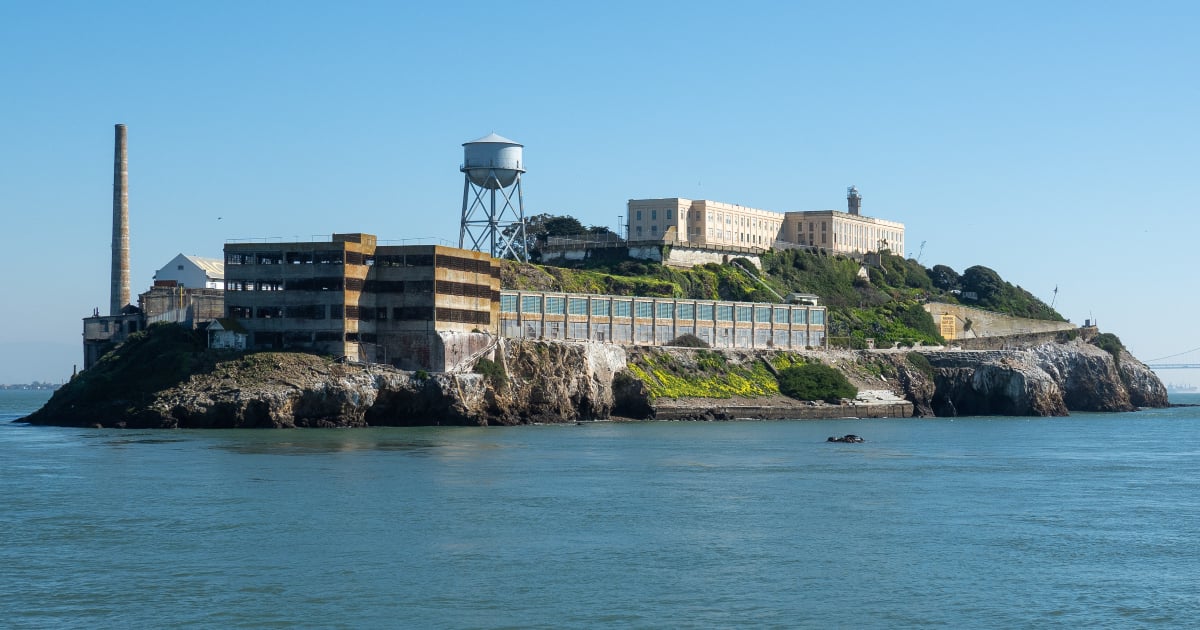
President Donald Trump appears to be on the verge of fulfilling one of his most contentious proposals: reopening the famed Alcatraz prison as a federal detention center. On Thursday, Attorney General Pam Bondi and Interior Secretary Doug Burgum visited Alcatraz Island, off the coast of San Francisco, where they are expected to officially announce the project, according to reports from ABC7 News.
Initially closed in 1963 and subsequently turned into a tourist destination managed by the National Park Service, the notorious prison's reopening was first mentioned by Trump last May. ABC7 also reported that Congress plans to introduce legislation to remove environmental protections from the island and take it out of the national parks system.
Currently, Alcatraz generates approximately $60 million annually as a tourist attraction. However, converting the site back into a prison and constructing new facilities is estimated to cost at least $250 million. Local leaders have fiercely criticized the decision, with Congresswoman Nancy Pelosi calling it "the most foolish move by this Administration."
"It's alarming that the only intellectual resources consulted by this Administration for such an idea seem to be decades-old Hollywood movies," Pelosi stated on her official X account. She also questioned the financial viability of such a project amid a growing national debt: "It remains to be seen how this Administration could spend billions on Alcatraz while already adding trillions to the debt with its reckless spending."
Local station Telemundo 48 also confirmed Bondi and Burgum's presence on the island this Thursday to announce the plan. Their report highlighted that the move could reverse Alcatraz's protected status, which has been in place since it became part of the Golden Gate National Recreation Area in 1972.
Known as "The Rock," Alcatraz housed notorious criminals like Al Capone and George "Machine Gun" Kelly. During its 29 years of operation, there were 14 escape attempts by 36 prisoners, most of whom were either captured or died in the process, according to FBI records.
The island's potential reactivation as a detention center has also sparked criticism from environmental groups, who warn of the ecological impact on the high-value natural area in San Francisco Bay. This move could be part of a broader strategy by the Trump Administration to toughen its stance on immigration and crime, particularly during an election year.
As part of Trump's hardline policy against immigrants, his administration created the controversial "Alligator Alcatraz" detention center in the heart of the Everglades, Florida, where over 55% of the detainees come from Guatemala, Mexico, and Cuba. A recently revealed report, based on official records, confirms that most of the more than 700 migrants housed there are of Latin American origin. Overall, 95% of the detainees hail from Latin American countries, though there are individuals from over 40 different nations.
Additionally, President Donald Trump's Administration plans to construct five new mega detention centers for immigrants in various Republican-governed states, following the model of the "Alligator Alcatraz" in Florida.
Understanding the Implications of Reopening Alcatraz
Why is reopening Alcatraz considered controversial?
Reopening Alcatraz is seen as controversial due to its historical significance, its current role as a tourist destination, and the potential environmental impact on the protected area. Additionally, the financial implications and the Administration's broader political strategy add layers of complexity to the debate.
What are the potential costs associated with converting Alcatraz back into a prison?
The estimated cost of converting Alcatraz back into a functional prison and constructing new facilities is at least $250 million, which raises concerns about its financial feasibility amid national debt issues.
How has the local community reacted to the proposal?
The proposal has faced strong opposition from local leaders and environmental groups, who criticize the decision for its potential ecological impact and question the Administration's priorities and strategic planning.