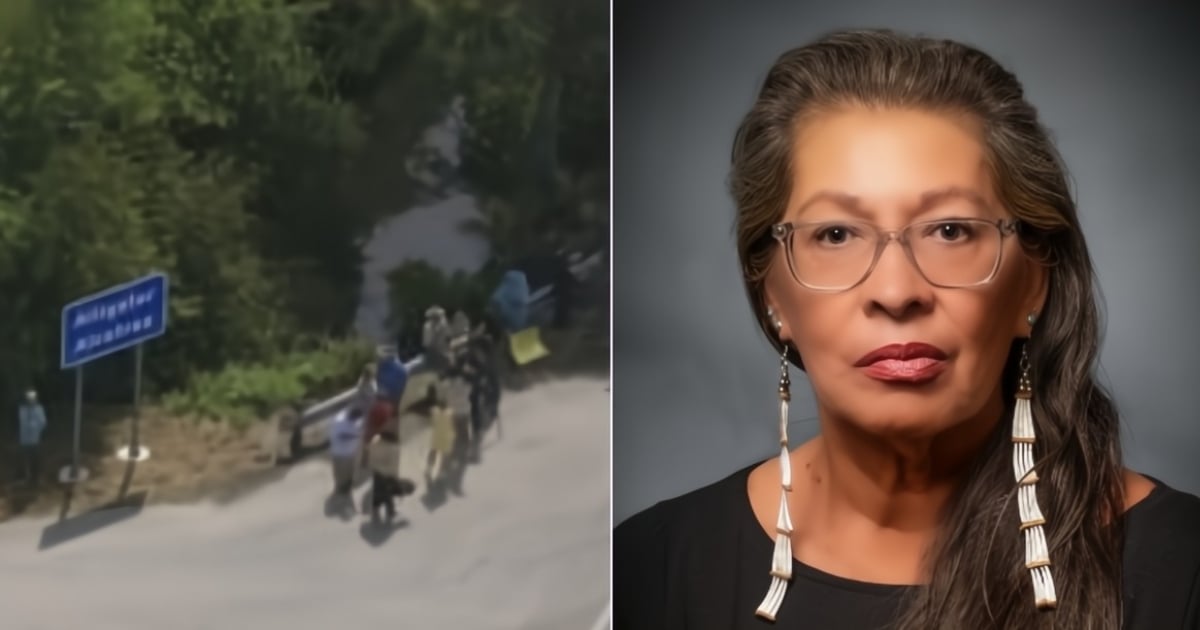
The Miccosukee Tribe of Florida has taken legal action against U.S. federal, state, and Miami-Dade County agencies over the establishment of the "Alligator Alcatraz" immigration detention center on what they claim is sacred land. This lawsuit is part of a broader case led by environmental groups, who also criticize the lack of environmental permits for the facility's construction.
"The construction of 'Alligator Alcatraz' infringes upon the Miccosukee's sovereign rights and jeopardizes a culturally and ecologically significant landscape. It also violates the human rights of immigrants and their families. This is both illegal and immoral," asserted Judith LeBlanc, executive director of the Native Organizers Alliance, in a statement quoted by EFE. The statement further highlights that the detention center was erected in just eight days on a disused airstrip within the Big Cypress National Preserve, adjacent to the Everglades National Park.
LeBlanc emphasizes that this area is part of the Miccosukee's ancestral territory, and they were not consulted regarding the prison's establishment.
Mandatory Consultation with Indigenous Tribes
The activist stressed that the federal government has a constitutional obligation to consult with tribes about any developments affecting their lands. "Consultation and consent are not optional," LeBlanc declared. "The Miccosukee have the inherent right to determine the future of their lands."
Since the facility began operations on July 3, it has been met with criticism from scientists, environmental activists, and state legislators, who have raised alarms about the facility's poor conditions and its ecological impact.
A Detention Center in a Fragile Ecosystem
Nicknamed "Alligator Alcatraz" due to its remote location, the presence of wildlife like alligators and pythons, and restricted access, the prison can hold around 3,000 migrants. Critics argue that its construction proceeded without an environmental impact assessment, despite being in an ecologically sensitive area.
Florida Governor Ron DeSantis defended the project, claiming it has "zero impact" on the Everglades. However, this statement has been challenged by experts and organizations such as PolitiFact, which documented visible damage to the natural surroundings.
"The governor’s claim that the project has 'zero impact' on the environment is implausible, given its proximity to the Everglades and indigenous cultural sites," commented Robert Glicksman, an environmental law professor at George Washington University.
Controversial Conditions and Historical Echoes
Beyond the territorial and environmental conflict, the center has faced criticism for its humanitarian conditions. Federal and state legislators who toured the facility described it as "inhumane," reporting that over 750 migrants are confined in cages.
Heavy rains on July 1, shortly before the center's opening, left puddles on the floors, highlighting its vulnerability to Florida's frequent hurricanes.
The location of "Alligator Alcatraz" was originally proposed for the Everglades Jetport in the 1960s—a major airport project that was canceled following an environmental report warning of its destructive impact. Now, more than five decades later, the site is embroiled in controversy once again.
The Miccosukee's lawsuit adds to a growing wave of legal actions and public denunciations over the human and environmental impact of the new detention center. State authorities maintain that no new development occurred and that the facility was built on existing infrastructure. However, scientists and environmentalists dispute this claim with satellite images, photographic evidence, and testimonies pointing to significant expansion in the area, disrupting critical habitats and violating historic environmental protection and indigenous consultation agreements.
The conflict over Alligator Alcatraz is just beginning, sparking a deep debate about the limits of state power, the rights of indigenous peoples, and environmental respect in the context of immigration control.
Miccosukee Tribe's Legal Battle Over Ancestral Lands
What is the Miccosukee Tribe's main grievance regarding the "Alligator Alcatraz" facility?
The Miccosukee Tribe's primary concern is the unauthorized use of their ancestral lands for the construction of the "Alligator Alcatraz" immigration detention center, which they view as a violation of their sovereign rights.
Why has the "Alligator Alcatraz" facility been criticized aside from the land dispute?
The facility has faced criticism for its poor humanitarian conditions, lack of environmental impact assessments, and its potential ecological damage to the sensitive Everglades area.
How has the Florida government responded to the allegations regarding the detention center?
Florida Governor Ron DeSantis has defended the project, asserting that it has "zero impact" on the Everglades, a claim that has been contested by environmental experts and organizations.