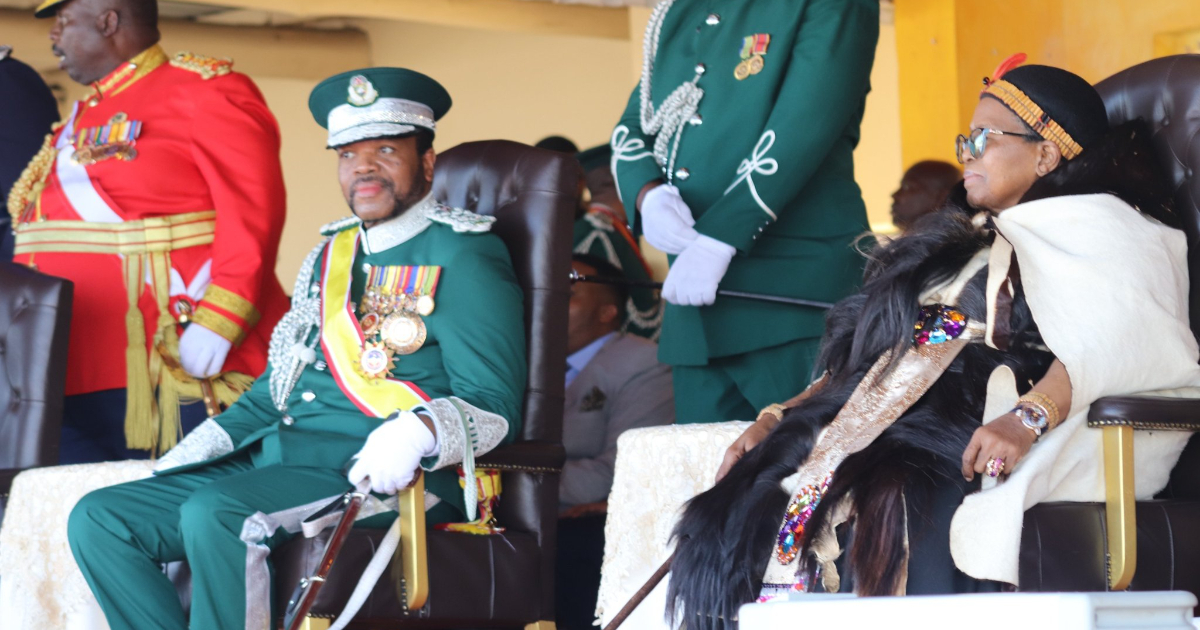
Eswatini, a small nation nestled between South Africa and Mozambique, has recently drawn international attention after agreeing to host five migrants deported by the United States, one of whom is a Cuban citizen. Formerly known as Swaziland, the country adopted its current name in 2018 following a decree by King Mswati III, who decided to revert to the traditional Swazi name. Swaziland was the name used during the British colonial era, which ended in 1968.
The King's Absolute Rule
Eswatini stands out as one of the few remaining absolute monarchies in the world and the only one in Africa. This political system grants King Mswati III complete control over the government, far from being a mere ceremonial figure. Ascending to the throne in 1986 at just 18 years old after his father, Sobhuza II, passed away, Mswati III governs with the power to enact laws by decree.
Critics have often targeted Mswati III for his autocratic governance style, accusing him of stifling political dissent while enjoying a lavish lifestyle in one of the globe's poorest nations. Reports claim he has 11 wives and owns luxury cars, with his wealth estimated between $200 million and $500 million. Meanwhile, the World Bank highlights that over half of Eswatini's 1.2 million citizens live on less than $4 a day.
Political Landscape Without Parties
Political parties have been banned since 1973, a decision made by King Sobhuza II. Though some parties still exist, they are prohibited from participating in elections or political processes. Parliamentary and Senate candidates must run as independents and are often vetted by traditional leaders loyal to the monarchy.
In recent years, pro-democracy protests have gained momentum. The government has faced allegations of using security forces to suppress these demonstrations, forcing many dissidents into exile.
Health Challenges and International Aid
Eswatini is grappling with a severe health crisis, holding the highest adult HIV prevalence rate globally at an estimated 26%, according to UNAIDS. Although significant progress has been made, the country's healthcare response heavily relies on foreign aid, including assistance from the United States, which was reduced under the Trump administration.
Migrants Deported to Eswatini by the U.S.
In a move reflecting the expanded deportation policies of the Trump administration, the U.S. sent five migrants from Cuba, Yemen, Laos, Vietnam, and Jamaica to Eswatini. The Cuban among them was deported due to a criminal record that included first-degree murder, aggravated assault on a police officer, grand theft auto, and ties to the Latin Kings gang.
The Cuban government, labeled as "recalcitrant" by the U.S. Department of State, refused to accept his return due to his criminal history, prompting the U.S. to relocate him to a third country, Eswatini in this case.
Eswatini's Official Response
Following the arrival of the deportees, the Eswatini government issued an official statement assuring that the five men are housed in isolated prison units and pose no threat to the public. Acting spokesperson Thabile Mdluli stated that the deportees are in transit to their home countries, with the process being conducted in collaboration with the International Organization for Migration (IOM).
Mdluli added that the agreement with the U.S. was the culmination of "months of robust negotiations" and that stringent risk assessments were conducted before accepting the individuals. "The Kingdom of Eswatini and the United States of America have enjoyed fruitful bilateral relations for over five decades. Every agreement is executed with meticulous care, prioritizing the interests of both nations," the statement concluded.
Eswatini and U.S. Deportation Policies
Why did Eswatini agree to accept deportees from the United States?
Eswatini agreed to accept the deportees as part of a bilateral agreement with the United States, following extensive negotiations and risk assessments. The decision was influenced by the long-standing diplomatic relations between the two countries.
What is the political system in Eswatini?
Eswatini is an absolute monarchy, meaning the king holds complete control over the government. Political parties are banned, and the king can govern by decree.
What are the health challenges faced by Eswatini?
Eswatini faces a significant health crisis with the highest adult HIV prevalence rate in the world. The country's healthcare system relies heavily on international aid, which has been reduced in recent years.