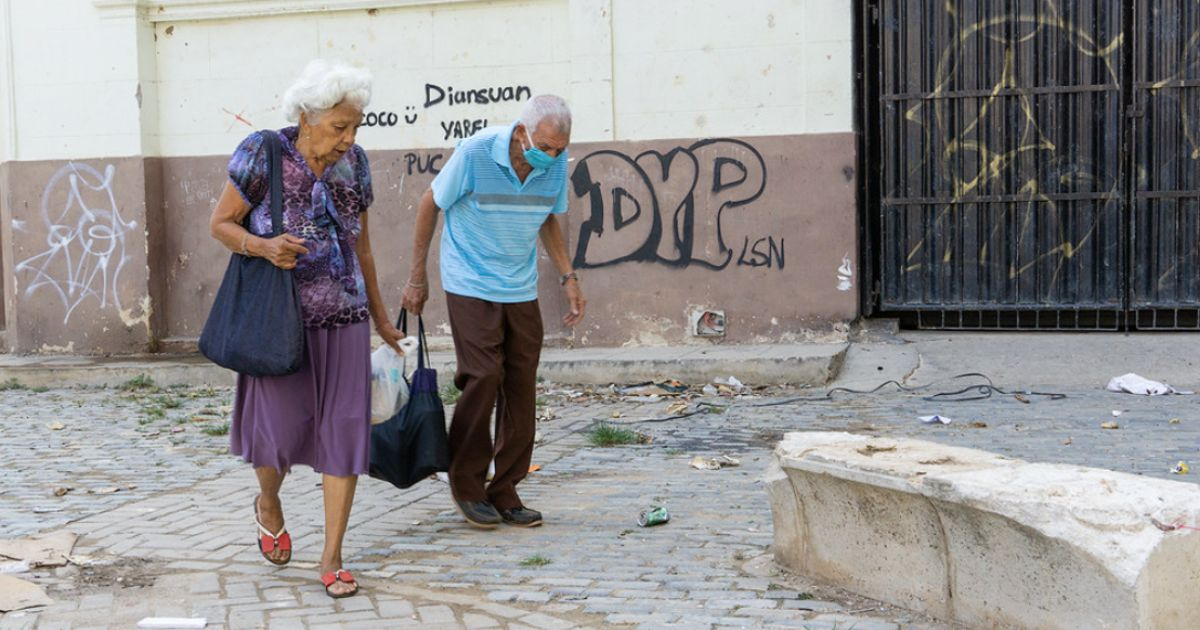
The National Office of Statistics and Information (ONEI) announced on Wednesday that Villa Clara leads Cuban provinces in elderly dependency, with 514 senior citizens for every 1,000 individuals of working age (between 15 and 59 years old). This information is part of the official report titled "Population Aging: Cuba and Its Territories 2024," publicly shared through the agency's institutional channels.
In a Facebook post, ONEI clarified that this statistic measures the economic and social pressure exerted by those aged 60 and above on the working-age population. "The burden on the economically active population is growing increasingly heavy," the institution highlighted in its statement.
Contrastingly, Guantánamo presents the lowest dependency ratio, with 377 seniors per 1,000 working-age individuals, marking it as the region with the least demographic pressure from the elderly.
Regional Disparities in Elderly Dependency
As per the ONEI's data, the national average stands at 440, underscoring the significant impact of aging on Cuba's demographic structure. Provinces in central Cuba report the highest figures, with Havana at 494, Sancti Spíritus and Cienfuegos both at 456, Camagüey at 459, and Pinar del Río at 450, all exceeding the national average.
Conversely, regions such as Artemisa (386), Santiago de Cuba (391), Granma (398), Isla de la Juventud (405), and Ciego de Ávila (404) fall below the average.
Implications and Challenges of an Aging Population
This elderly dependency ratio highlights one of Cuba's most pressing demographic trends: rapid population aging, exacerbated by low birth rates and the massive emigration of young, working-age individuals. ONEI warns that the increasing ratio poses significant challenges for the pension system, healthcare services, and social protection policies, especially amid economic crisis and institutional fragility.
While the report is part of the regular demographic studies conducted by ONEI to provide statistical tools for decision-making, the findings not only reaffirm a known trend but also stress the urgent need to adapt Cuba's economic and social model to a rapidly shifting population structure. Cuba ranks among the most aged countries in Latin America and the Caribbean.
Demographic Decline and its Impact on Society
Cuba faces a rapidly accelerating demographic decline, characterized by an aging population, high emigration rates, and declining birth numbers. The country remains one of the oldest in Latin America and the Caribbean, with indicators showing that this phenomenon is not only persistent but worsening.
The swift aging process is particularly evident in central provinces such as Villa Clara, Sancti Spíritus, and Cienfuegos, where the elderly population far exceeds the number of young, working-age residents. The exodus of young people is another critical factor in this crisis, affecting even rural areas as fields are abandoned by youth seeking opportunities abroad.
This pattern repeats across cities and provinces; for instance, Las Tunas has lost 11.5% of its population over the past eight years, while Guantánamo has seen a decline of 40,000 inhabitants in a decade. This population decline directly impacts the social and economic balance of the country. As the workforce diminishes, pressures on the already fragile health and pension systems intensify, exacerbated by the prolonged economic crisis.
Aging in Cuba increasingly correlates with poverty, neglect, and isolation, highlighting the inadequacy of effective public policies to support this vulnerable demographic. Simultaneously, the country faces alarming rates of teenage pregnancy, reflecting structural gaps in sexual education and access to reproductive health services. Although these births might seem like a demographic counterbalance, they actually deepen inequalities and perpetuate cycles of poverty, especially in rural and marginalized areas.
Understanding Cuba's Demographic Challenges
What is the elderly dependency ratio in Cuba?
The elderly dependency ratio in Cuba measures the number of people aged 60 and above per 1,000 individuals of working age (15-59). It highlights the economic and social pressure on the working population caused by a significant elderly population.
Which Cuban province has the highest elderly dependency ratio?
Villa Clara has the highest elderly dependency ratio in Cuba, with 514 seniors for every 1,000 working-age individuals.
How does the aging population affect Cuba's economy?
The aging population in Cuba increases pressure on the pension system, healthcare services, and social protection policies, challenging the country's ability to provide for its elderly, especially amidst ongoing economic struggles.