In a surprising admission amidst a severe economic downturn, the Cuban government acknowledged on Wednesday that more than 310,000 individuals are currently experiencing poverty or social vulnerability in the nation. This revelation comes after recent official statements had controversially denied the existence of homelessness on the island.
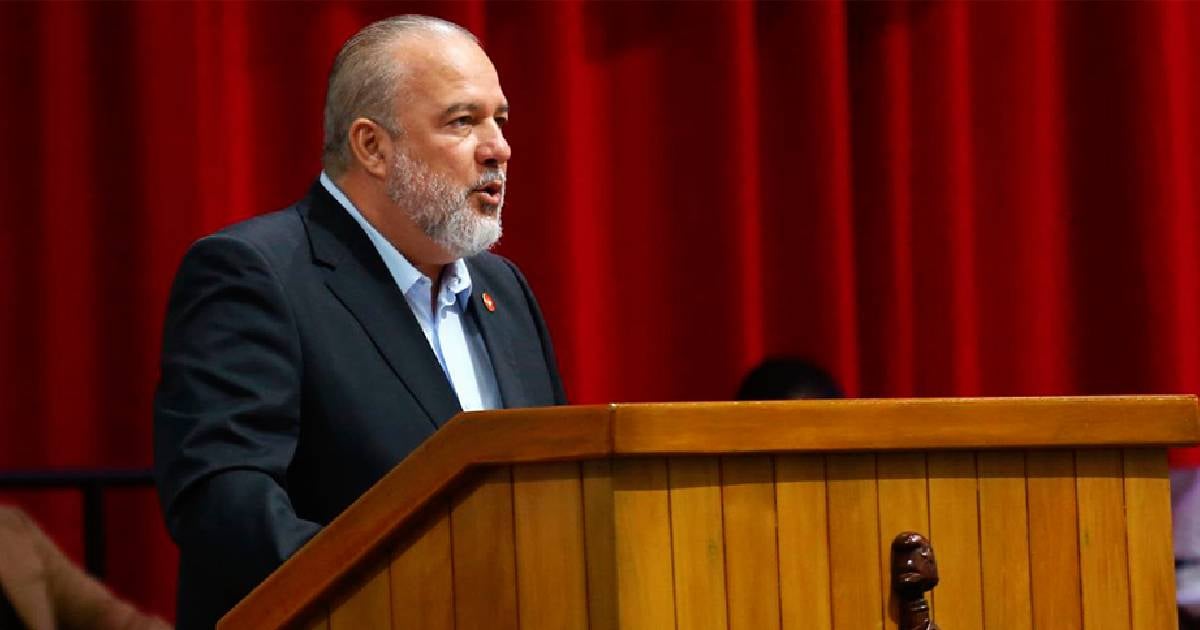
During a recent session in Parliament, Cuban Prime Minister Manuel Marrero Cruz stated that the social assistance budget has supported 182,506 families, encompassing these over 310,000 vulnerable citizens. The government has allocated 2,672 million Cuban pesos for this initiative, representing 45% of the annual plan, aimed at providing both financial and material support, he noted.
"We acknowledge that these 182,000 families and 310,000 individuals do not represent all those facing vulnerability in the country; the economic situation has increased the number of people experiencing economic hardship," said Marrero Cruz. He added that the government is prioritizing social transformation in 1,252 communities nationwide, pledging to continue efforts to enhance the quality of social services and strengthen institutional capacity in this area.
This admission follows recent remarks by the now former Minister of Labor and Social Security, Marta Elena Feitó Cabrera, who earlier in the week asserted in Parliament that there are "no beggars" in Cuba, but rather "disguised" individuals, whom she labeled as "drunkards" and "pretenders." Her comments denying the existence of hunger on the island and blaming citizens for their poverty sparked a wave of outrage across social media, independent media outlets, and among the public.
Within hours, the Political Bureau of the Communist Party of Cuba and the Council of State accepted her resignation, reportedly submitted after a "joint analysis" with the government's leadership. According to a report by Cubadebate, the resignation was prompted by her "lack of objectivity and sensitivity" in addressing issues central to current political and governmental management.
Marta Elena Feitó Cabrera had held her position since 2019. Her resignation is widely seen as an attempt by the government to mitigate the political fallout from her statements during a period of significant economic stress and social discontent.
Understanding Cuba's Social and Economic Challenges
What prompted the Cuban government to acknowledge poverty levels?
The Cuban government recognized the poverty levels following severe public criticism and economic challenges, which contradicted earlier claims denying the presence of homelessness and poverty.
How is the Cuban government addressing social vulnerability?
The government has allocated resources to support vulnerable families and is focusing on transforming 1,252 communities to improve social services and institutional capacity.
What were the consequences of the former minister's statements?
The former Minister of Labor and Social Security, Marta Elena Feitó Cabrera, resigned following backlash over her insensitive remarks regarding poverty and hunger in Cuba, which led to her resignation being seen as an effort to reduce political damage.