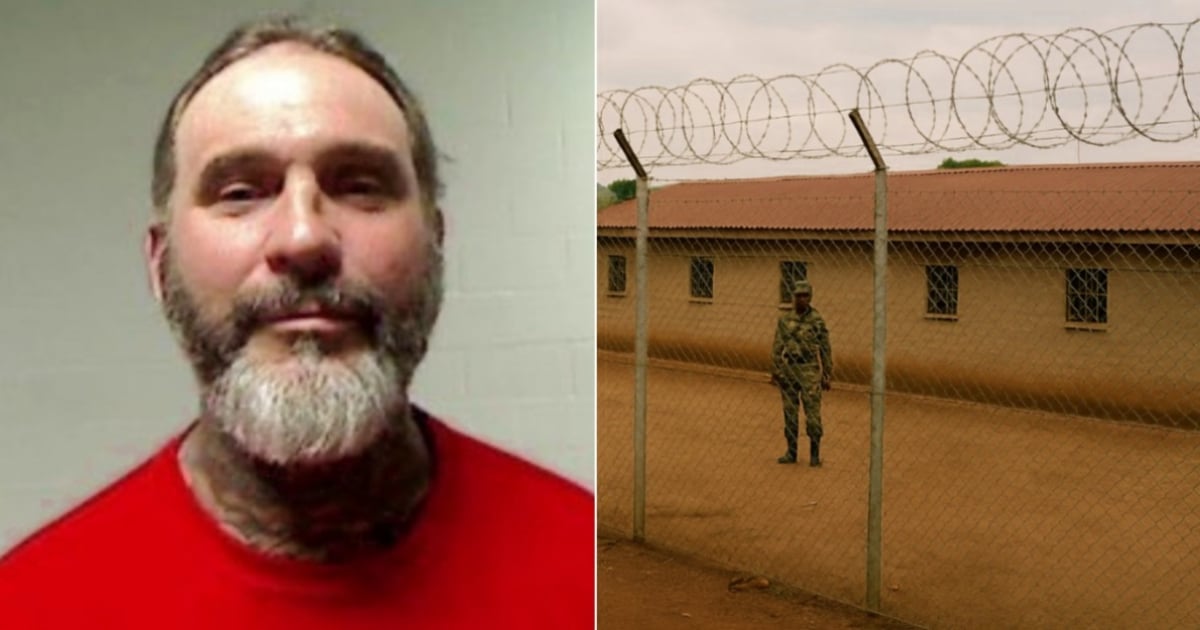
The United States has deported five migrants of various nationalities, including a Cuban, to the distant African kingdom of Eswatini. This move is part of an expansion of the deportation program to third countries launched by President Donald Trump's administration. Tricia McLaughlin, the Deputy Assistant Secretary for Public Affairs at the DHS, confirmed on Wednesday that these individuals were selected due to their criminal records. "These people are so uniquely barbaric that their home countries refused to take them back," McLaughlin said on X.
The Cuban deportee was convicted of first-degree murder, aggravated assault on a police officer, grand theft auto, and reckless driving with aggravated fleeing. He has been identified as a confirmed member of the Latin Kings gang. While the Department of Homeland Security (DHS) has welcomed the news of the deportations, it has raised concerns among human rights groups about the fate and rights of the deportees sent to a country with no ties to their origins.
The Cuban Regime's Reluctance
The case of the Cuban migrant, whose identity remains undisclosed by U.S. authorities, highlights Havana's stance on migration agreements with Washington. Although Cuba officially commits to accepting returned citizens, in practice, it systematically refuses those with serious criminal backgrounds, reviewing each case through the Ministry of the Interior (MININT). The refusal to repatriate the Cuban opened the door to a controversial alternative: deportation to a third country with no cultural, linguistic, or legal ties to the migrant.
Understanding Eswatini
Formerly known as Swaziland, Eswatini is a nation of only 1.2 million people. Ruled by King Mswati III since 1986, it is regarded as Africa's last absolute monarchy and one of the few remaining worldwide. Political parties are effectively banned, and international organizations have reported systematic repression against pro-democracy movements. Mswati's regime has faced criticism for his lavish lifestyle in a country where much of the population lives in poverty. In 2021, protests in the nation were harshly suppressed, resulting in numerous deaths. Despite this, Washington has quietly strengthened ties with the kingdom, facilitating agreements like the one that allowed the arrival of the deportee-laden flight.
Washington Labels Cuban Deportee a "Depraved Monster"
The U.S. authorities have portrayed the deported group as a neutralized threat. "They have terrorized American communities," McLaughlin said, referring to the five men as "depraved monsters." The DHS did not provide specifics on the flight's date or departure point to Eswatini, nor did it confirm whether the men were taken directly from prisons or through immigration operations.
The Cuban's criminal history is particularly severe. Besides his connection with the Latin Kings, he had served a three-year prison sentence for violent offenses, including assaulting a police officer, a crime severely punished in the United States.
"Not a Dumping Ground for Criminals"
The decision to send deportees to Eswatini has raised concerns both within and outside the African nation. The pro-democracy organization SWALIMO expressed worry about the secrecy of the agreement and questioned the risks of hosting individuals with such complex criminal backgrounds. "It may pose significant strain by housing and managing individuals with serious criminal convictions," stated spokesperson Ingiphile Dlamini, who also criticized the "remarkable lack of official communication" by the Eswatini government regarding the agreement with Washington.
In response to public concern, Eswatini government spokesperson Thabile Mdluli assured that the five detainees are currently housed in isolated penitentiary units and pose no threat to the country or its citizens. Additionally, Mdluli confirmed that they are working with the United Nations immigration agency to facilitate the deportees' transit to their countries of origin, though no specific date or guarantee of repatriation has been set.
The Expansion of Deportations
The United States Supreme Court recently cleared the way for such deportations through a ruling that permits sending migrants to countries other than their native ones. In May, two Cubans, José Manuel Rodríguez Quiñones and Enrique Arias Hierro, were sent to South Sudan after the Cuban regime refused to accept them. The Trump administration is quietly negotiating similar agreements with at least 58 countries, many in Africa. Rwanda has publicly acknowledged discussions with Washington, while other nations like Nigeria have refused to accept deportees who are not their citizens.
Currently, 23 countries are on the Department of State's "recalcitrant" list, including Cuba, Venezuela, Haiti, and China. While U.S. authorities tout these expulsions as a security achievement, the future of the deported Cuban remains uncertain. It has not been clarified if he has access to legal representation or if he can communicate with his family in Cuba or the United States. Nor is it clear if he might be transferred to a third country or remain indefinitely in custody under Mswati III's regime.
Key Questions on U.S. Deportations to Eswatini
What is the significance of deporting migrants to Eswatini?
Deporting migrants to Eswatini represents an expansion of the U.S. deportation program to third countries, where individuals with serious criminal records are sent to nations with no cultural or legal ties, raising human rights concerns.
Why did the Cuban government refuse to accept its deported citizen?
The Cuban government systematically refuses to accept citizens with severe criminal backgrounds, despite officially committing to receiving deported citizens, reviewing each case through its Ministry of the Interior.
How are deported individuals managed in Eswatini?
Deported individuals are housed in isolated penitentiary units, and Eswatini is working with the United Nations immigration agency to facilitate their transit to their countries of origin, although no specific date has been set.