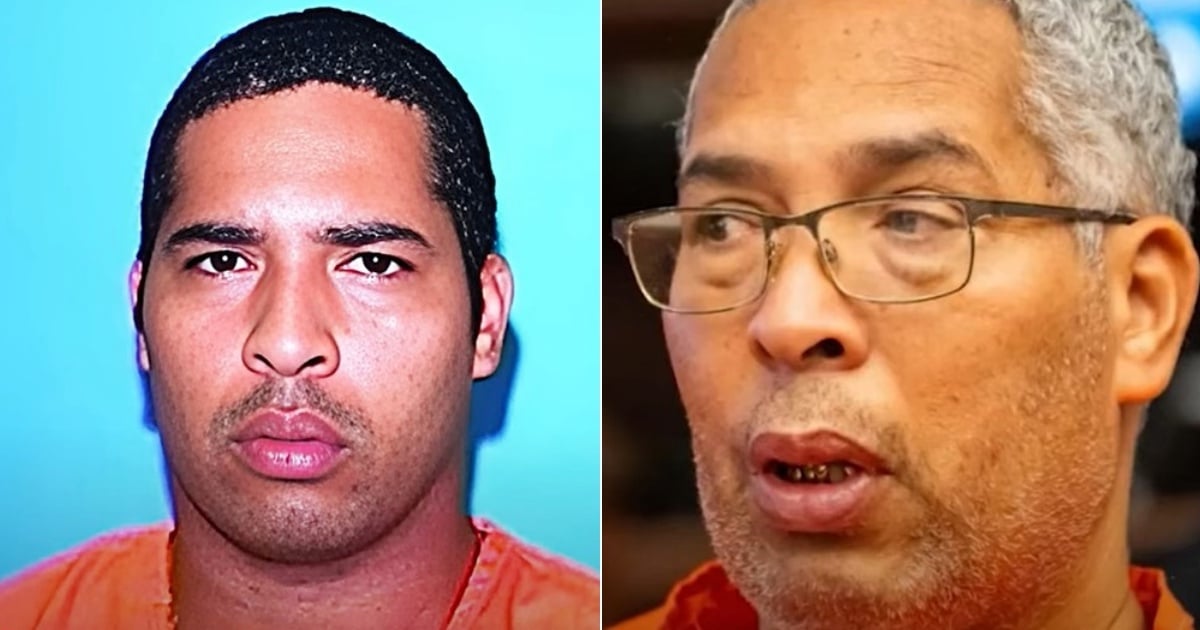
Michael Bernard Bell, convicted of fatally shooting two individuals in 1993 in Jacksonville, met his end by lethal injection at the Florida State Prison in Raiford this Tuesday evening. This marks Florida as the state with the highest number of executions so far in 2025. Bell, aged 54, was pronounced dead at 6:25 p.m., confirmed by Bryan Griffin, spokesperson for Governor Ron DeSantis.
The execution was carried out with precision under the watchful eyes of officials from the Florida Department of Corrections (FDC), who described the procedure as "strictly in accordance with established protocols." Bell's case attracted attention not only due to the heinous nature of the crime over three decades ago but also because of the personal vendetta that fueled it—an act of revenge for his brother's death, as reported by EFE.
Revenge-Fueled Double Murder
In December 1993, Bell mistook a car parked outside a bar for belonging to the man who killed his brother Lamar earlier that year. Unbeknownst to him, the vehicle had been sold to another person, Jimmy West, aged 23. Believing he had a chance to avenge his brother, Bell summoned two friends, grabbed an AK-47 rifle, and headed to the scene.
Court records detail that the car was situated outside a liquor store in Jacksonville. Bell and his accomplices waited until West, Tamecka Smith, 18, and another woman emerged from the establishment. Bell opened fire, killing West instantly and fatally wounding Smith, who later died in the hospital. The third woman escaped unharmed. Witnesses testified that Bell also fired into a crowd before fleeing.
He was apprehended the following year, and in 1995, was sentenced to death. The evidence was compelling: eyewitness accounts, ballistic tests, and the discovery of the incriminating weapon.
More Crimes in Bell's Past
Bell's criminal history didn't end with that attack. He was later convicted of three additional murders: a woman and her young son in 1989, and his mother's partner, whom he killed just four months before the Jacksonville incident. Bell was also among the inmates who, during their youth, were held at the notorious Florida School for Boys, also known as the Dozier School, infamous for its history of physical and psychological abuse, as well as concealed deaths.
In 2016, anthropologists unearthed 55 unmarked graves at the site. The institution closed in 2011 and inspired Colson Whitehead's Pulitzer Prize-winning novel, The Nickel Boys.
Bell's Final Hours
On his last day, Bell awoke at 6:30 a.m. and enjoyed a final meal of omelet, bacon, fries, and orange juice. He later met with a spiritual advisor but received no other visitors. In the execution chamber, he remained calm, glancing around as the drugs were administered.
When asked by the warden if he had any last words, Bell replied, "Thank you for not letting me spend the rest of my life in prison." After two minutes, he closed his eyes, his breathing became irregular, and then stopped. The prison doctor confirmed his death at 6:25 p.m., as reported by local media.
Appeal Denied
In the days leading up to the execution, Bell's attorneys filed an appeal with the Florida Supreme Court, followed by the U.S. Supreme Court, citing new evidence related to key witness testimony. However, both courts unanimously denied the request for a stay, with the state court noting the "overwhelming evidence of guilt" in a 54-page opinion.
A Record Year for Florida
With Bell's execution, Florida ties its annual record for executions since the reinstatement of the death penalty in 1976, matching the eight executions carried out in 1984 and 2014. If the schedule proceeds, another execution set for July 31 will break this record.
Florida leads the nation in executions for 2025, surpassing Texas and South Carolina, which have each conducted four. Nationally, 26 individuals have been executed this year, the highest number since 2015, when there were 28. This increase has alarmed human rights organizations and religious leaders, who recently sent a letter to Governor Ron DeSantis urging a halt to the executions.
Since 2023, the governor has signed orders resulting in fifteen executions. Florida has also altered its laws to expedite the death penalty process. In 2023, it became one of only two states, along with Alabama, where a unanimous jury is not required to impose the death penalty—only a majority of 8 out of 12 jurors is needed.
FAQs on Florida's Death Penalty Practices
How many executions has Florida conducted in 2025?
Florida has conducted eight executions so far in 2025, tying its annual record since the death penalty was reinstated in 1976.
What was Michael Bernard Bell's motive for the murders?
Michael Bernard Bell committed the murders as an act of revenge for his brother's death, mistakenly targeting individuals he believed were involved.
What changes have been made to Florida's death penalty laws?
In 2023, Florida changed its laws to allow the death penalty to be imposed without a unanimous jury decision, requiring only a majority of 8 out of 12 jurors.