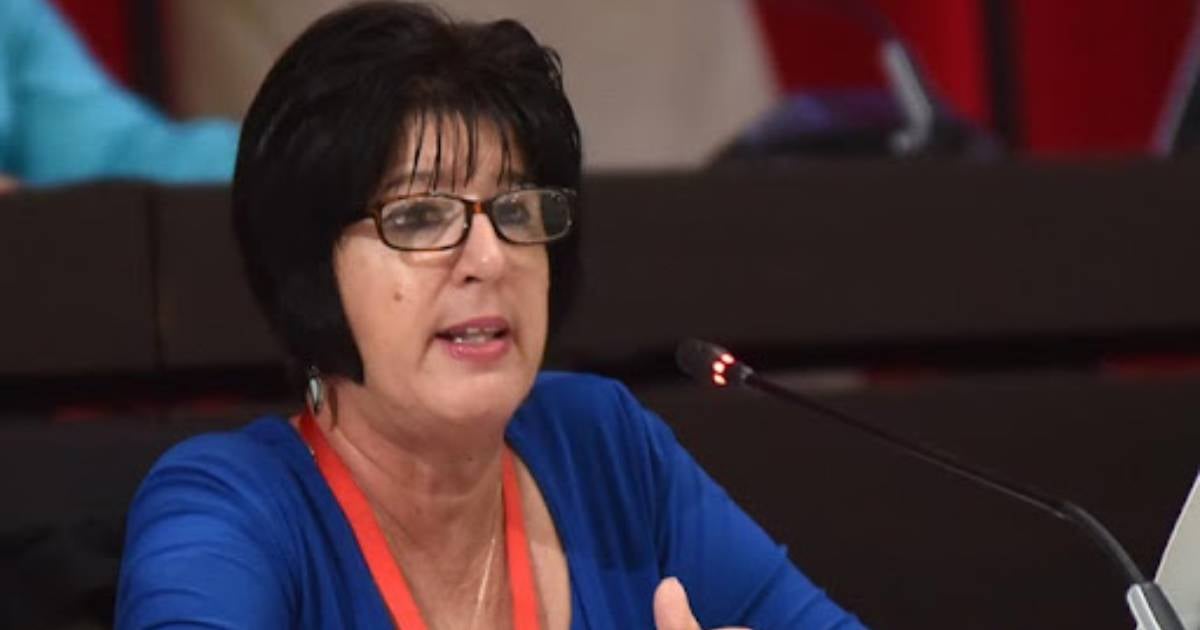
On July 14, during a session of the National Assembly, Cuba's Minister of Labor and Social Security, Marta Elena Feitó Cabrera, claimed, "There are no beggars in Cuba. There are people pretending to be beggars to make easy money." Her comments, delivered from one of the island's most authoritative platforms, ignited widespread outrage both domestically and internationally.
In response, Cuban activists, intellectuals, and citizens have launched a campaign demanding Feitó's immediate removal, labeling her remarks as an "insult to the Cuban people." The campaign is being propelled by an open petition and a letter to the National Assembly of People's Power, accusing the minister of denying severe poverty and criminalizing society's most vulnerable.
Feitó's statement suggested that those rummaging through trash bins "are not beggars but illegal participants in the recycling service," implying that this lifestyle is a choice rather than a necessity. The backlash was swift.
"A public humiliation from the seat of power against the most vulnerable: abandoned elders, the homeless, and mothers begging for their children," the citizen letter highlights, also criticizing the complicit silence of the assembly members who neither interrupted nor challenged the minister's controversial words.
Social media became a platform for protest, with activists like Carolina Barrero sharing images of individuals sleeping in doorways, on streets, or in complete destitution. "Let's see if they finally 'see' the harm they're responsible for," she wrote, directing her message at Feitó, Díaz-Canel, Marrero, and Raúl Castro.
From Camagüey, user Ileana Sánchez Hing voiced her opinion: "Madam Minister, you should resign. Don't wait to be forced out," she declared in a letter, highlighting that in Cuba, a minimum pension is only 1,528 pesos after 45 years of work. "There must be beggars, and we have very little. Besides, there are those who aren't 'pretending,' as you call it."
The public letter demanding Feitó's removal acknowledges that replacing a minister won't solve the country's deep-rooted issues but sees it as a legitimate form of civic resistance against the regime's dehumanization. "The people remember. The people demand," concludes the document, urging Cubans both on the island and abroad to add their signatures.
In a nation ravaged by inflation, mass emigration, the breakdown of essential services, and the neglect of large population segments, Feitó's statements not only offend but also starkly reveal the vast disconnect between the official narrative and the harsh reality faced by everyday Cubans.
Understanding the Petition Against Marta Elena Feitó
Why are people calling for Marta Elena Feitó's removal?
People are demanding her removal due to her controversial remarks denying the existence of beggars in Cuba, which many view as a dismissal of extreme poverty and a criminalization of the vulnerable.
What did Marta Elena Feitó say about homelessness in Cuba?
Feitó stated that there are no beggars in Cuba, only people pretending to be beggars for easy money, suggesting that those who are homeless do so by choice.
How has the public reacted to Feitó's comments?
The public has reacted with outrage, launching a petition for her removal and sharing images of homelessness to counter her claims. The response highlights a disconnect between official statements and reality.