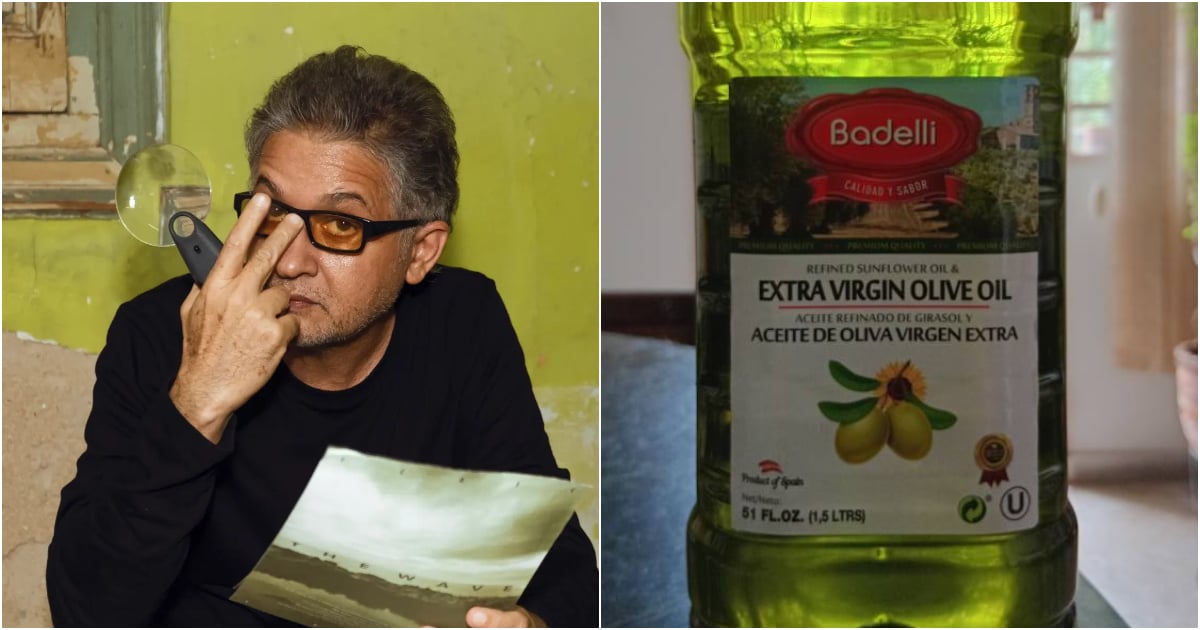
A seemingly innocuous bottle of oil purchased from a small private business near the Mexican Embassy in the Miramar district of Havana has become a stark example of the dire situation facing Cuban consumers. Cuban filmmaker Enrique "Kiki" Álvarez took to Facebook to voice his frustration, stating, "The new scam. Neither extra, nor virgin, nor olive." He believed he was buying extra virgin olive oil from this private store, but instead, he received a "clear, liquid, odorless oil—let's hope it's edible."
Álvarez noted that the bottle was sealed, implying that the deception occurred not at the point of sale, but rather within the supply chain—whether it be the importer, the supplier, or both. This case of presumably adulterated or diluted oil, ambiguously labeled, exemplifies how businesses operate without effective quality control in a country where regulations are either absent or conveniently overlooked.
Consumer Protection in Cuba: A Cruel Joke?
"We are exposed to all of this because of a dysfunctional economy that lacks even basic quality control mechanisms," Álvarez argued, adding, "Not to mention the 'injected' fruits, watered-down butter, and other abuses we've endured for years as third-rate consumers." He shared his experience as a symptom and diagnosis of the moral and physical decay prevalent in Cuba, acknowledging that most people in the country cannot even aspire to consume healthy products. "Yes, it's the blockade, I know. But it's also our lack of imagination in managing it," he added.
In response to his post, others admitted to falling for the same trap, some paying 1,500 pesos, others as much as 3,800, with the true composition—95% sunflower oil and only 5% extra virgin olive oil—hidden in "fine print" in English. The packaging prominently features "olive oil," creating a legally disguised but morally blatant scam.
The Broader Picture: A Market Without Rules
The collective outcry reveals a pattern. This is not merely about mislabeled oil, but a commercialization network exploiting need and misinformation. Many sellers are well aware of what they are putting on shelves. However, in a market lacking clear rules, responsibility is blurred between producer, supplier, and retailer. Consumers are left with no choice but to pay—and remain silent.
Such incidents reflect a country where scarcity extends beyond products to include ethics, institutional oversight, and respect for public health. For many Cubans, the much-touted consumer protection system is a farce, with numerous citizens admitting they've almost become accustomed to poor treatment in both state and private shops.
Quality Concerns and Economic Challenges
Cuban television has criticized the management of private businesses. In a report, government spokesperson Talía González claimed that "most basic necessity items in national currency are found in the non-state sector but do not meet established prices." The report focused on the "abusive prices" of small private businesses, while ignoring that government dollar stores have imposed even higher costs. Although the government demands that private businesses sell products at controlled prices, entrepreneurs lament that state wholesale markets do not provide sufficient supplies.
Ongoing complaints about the poor quality of food products have raised alarm among the Cuban populace, who have ever-dwindling options for securing adequate nutrition. Meanwhile, the government continues to push for the dollarization of the economy with stores accessible only to those receiving dollars from abroad.
In March, Cuban actor and activist Daniel Triana Rubio, known on social media as Danielito Tri Tri, shared his experiences with food sold in private businesses. "Lately, whenever you buy cookies, biscuits, chocolate, or anything from a kiosk (private business), there's a high chance it's gone bad. Everything is stale, rancid, expired. The bread flour tastes like a sack," he lamented.
Triana's post added to a series of reports on substandard food quality in Cuba, especially within the state sector. One of the most emblematic cases of poor product and service quality is the iconic state-run Coppelia ice cream parlor in Havana's Vedado neighborhood. Despite promises of improvement, the parlor continues to offer limited flavor options and subpar service.
In September 2024, it emerged that the Piano Bar "El Dorado," centrally located between the iconic Parque Vidal and the Boulevard in Santa Clara, Villa Clara province, was committing various infractions, from excessive charges to consumer deception.
Additionally, a Cuban mother reported receiving rice from a state store infested with weevils, suggesting that the government stores products in military reserves and distributes them only when they're about to spoil.
Another notable incident occurred in Santiago de Cuba, where in February, citizens complained about the poor quality of rationed bread, which reached bakeries with a poor texture, burnt parts, and a strange taste.
Insights into the Cuban Consumer Market
What prompted Kiki Álvarez to speak out about the olive oil scam?
Kiki Álvarez was prompted to speak out after purchasing what he believed to be extra virgin olive oil, only to discover it was a different, lower-quality product.
How does the Cuban market lack consumer protection?
The Cuban market lacks effective consumer protection due to the absence of quality control regulations and oversight, leading to widespread exploitation and misinformation.
What are some other examples of poor product quality in Cuba?
Other examples include 'injected' fruits, watered-down butter, and state-run establishments like Coppelia offering limited and poor-quality options.
How does the economy contribute to these issues?
Cuba's dysfunctional economy lacks mechanisms for quality control, resulting in a market where accountability is blurred and consumer rights are neglected.