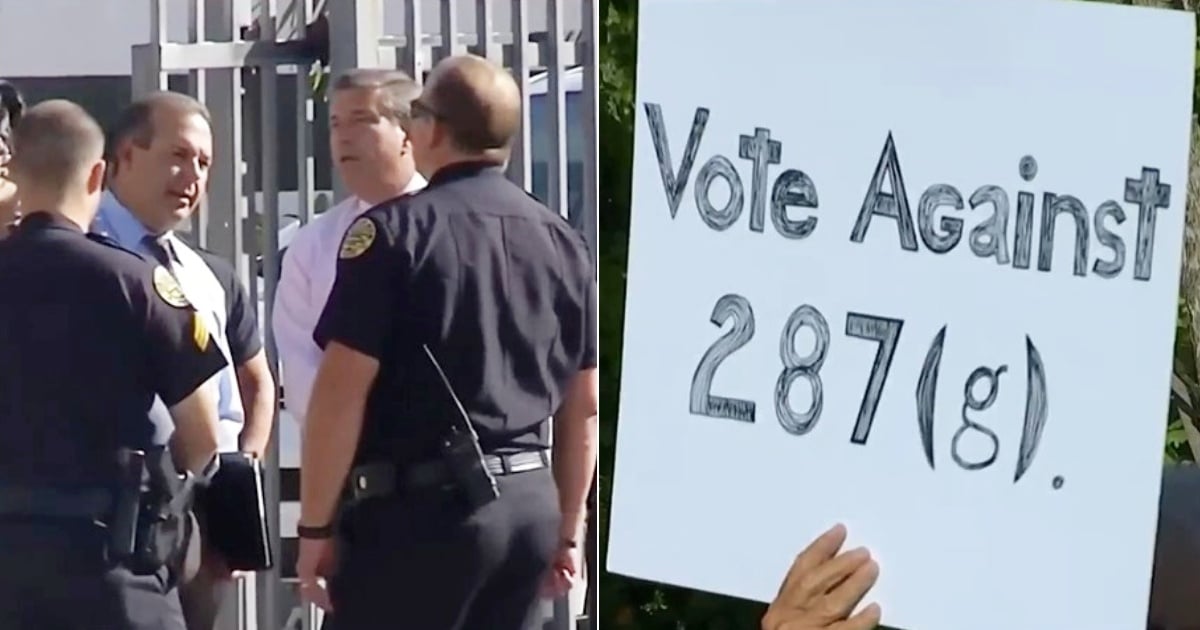
South Florida, a region celebrated for its cultural diversity and significant Hispanic population, has become a focal point for more stringent immigration policies under the administration of President Donald Trump. Despite the area's large immigrant community from Latin America, most cities in Miami-Dade, Broward, and Monroe counties have entered into cooperation agreements with the Immigration and Customs Enforcement (ICE) through the 287(g) program. This initiative allows state and local law enforcement agencies to work alongside the federal government in enforcing immigration laws.
ICE Cooperation in Miami-Dade County
In Miami-Dade County, several cities with predominantly immigrant populations have formalized agreements with ICE:
Miami: On June 17, the city commission approved a measure by a 3 to 2 vote allowing local police to cooperate directly with ICE agents, facilitating the identification and processing of undocumented immigrants.
Homestead: Known for its agricultural base and large immigrant workforce from Mexico, Central America, and South America, Homestead entered into a formal collaboration with ICE in April.
Hialeah: On March 12, the city council unanimously agreed for its police department to actively support immigration operations by signing an agreement with ICE.
Doral: Home to the largest concentration of Venezuelans in the United States, many of whom arrived under now-defunct programs like TPS or humanitarian parole, Doral has also joined this initiative.
Other Participating Cities
Additional Miami-Dade cities that have partnered with ICE include Sweetwater, Coral Gables, West Miami, Miami Springs, and Sunny Isles Beach. In Broward County, Davie and Pompano Beach have signed on, according to a recent list published by Univision. In Monroe County, the island cities of Key West and Key Colony Beach have also joined. All sheriff departments across Florida's 67 counties have agreements under this program, making Florida the only state where every county collaborates with ICE in this manner.
Understanding the 287(g) Program
The 287(g) program, authorized by Congress in 1996, allows the Department of Homeland Security to delegate immigration enforcement to state and local law enforcement agencies. Although its use was limited for years, it has been aggressively reactivated and expanded under President Donald Trump, with support from Governor Ron DeSantis. These agreements enable local authorities to perform tasks typically reserved for federal agents, such as:
- Checking the immigration status of individuals detained in jails.
- Executing immigration arrest warrants issued by ICE.
- Investigating undocumented individuals during local patrols and operations.
There are three operational models under the 287(g) program:
- Jail Enforcement Model: Allows for the review of detainees' immigration backgrounds.
- Warrant Service Officer Model: Grants local police the authority to respond to ICE requests.
- Task Force Model: Enables officers to engage in daily operations with immigration enforcement powers.
Florida's Statewide Push for Strict Immigration Policies
In February, Governor Ron DeSantis vigorously relaunched the 287(g) program, making it clear that Florida would not become a sanctuary state. Through a series of laws and agreements, his administration has strengthened law enforcement's ability to directly enforce immigration laws. "If all states did the same, this problem would disappear much faster," DeSantis asserted from Homestead Air Reserve Base, surrounded by Department of Homeland Security representatives. The new legal framework includes:
- Criminalizing illegal entry into the state, with penalties of up to nine months in jail.
- Requiring the detention of immigrants for up to 48 hours before transferring them to ICE.
- Mandatory implementation of the E-Verify system in all businesses, even small ones, to verify workers' immigration status.
A $250 million budget has also been approved to enhance police infrastructure and support local immigration operations.
Controversies and Challenges
The policies have faced significant criticism from human rights organizations, such as the American Civil Liberties Union (ACLU), which warns of racial discrimination risks and the erosion of trust between immigrant communities and authorities. "This law and the rhetoric surrounding it will foster racial discrimination and fear," stated Kara Gross, legislative director of the ACLU in Florida. However, Polk County Sheriff Grady Judd downplayed these concerns, asserting that they are simply "following the law" to deport criminals and repeat offenders. Nonetheless, the capacity of jails to accommodate detainees has been highlighted as a potential bottleneck. Without expanded spaces, Judd warned, "the system will collapse in days."
With all counties under cooperation agreements and an increasing number of cities individually joining, Florida emerges as a model for strict immigration law enforcement, while the debate over human rights, public safety, and justice continues to polarize society.
FAQs about South Florida's Immigration Policies
What is the 287(g) program?
The 287(g) program allows state and local law enforcement to collaborate with federal immigration authorities to enforce immigration laws, by delegating certain federal immigration enforcement tasks to local agencies.
Which cities in South Florida have agreements with ICE?
Cities in Miami-Dade County such as Miami, Homestead, Hialeah, and Doral, as well as others in Broward and Monroe counties like Davie, Pompano Beach, Key West, and Key Colony Beach, have agreements with ICE.
How has Florida's Governor supported the 287(g) program?
Governor Ron DeSantis has relaunched and expanded the 287(g) program in Florida, emphasizing strict immigration policies, criminalizing illegal entry, mandating E-Verify, and approving budgets to support these enforcement efforts.