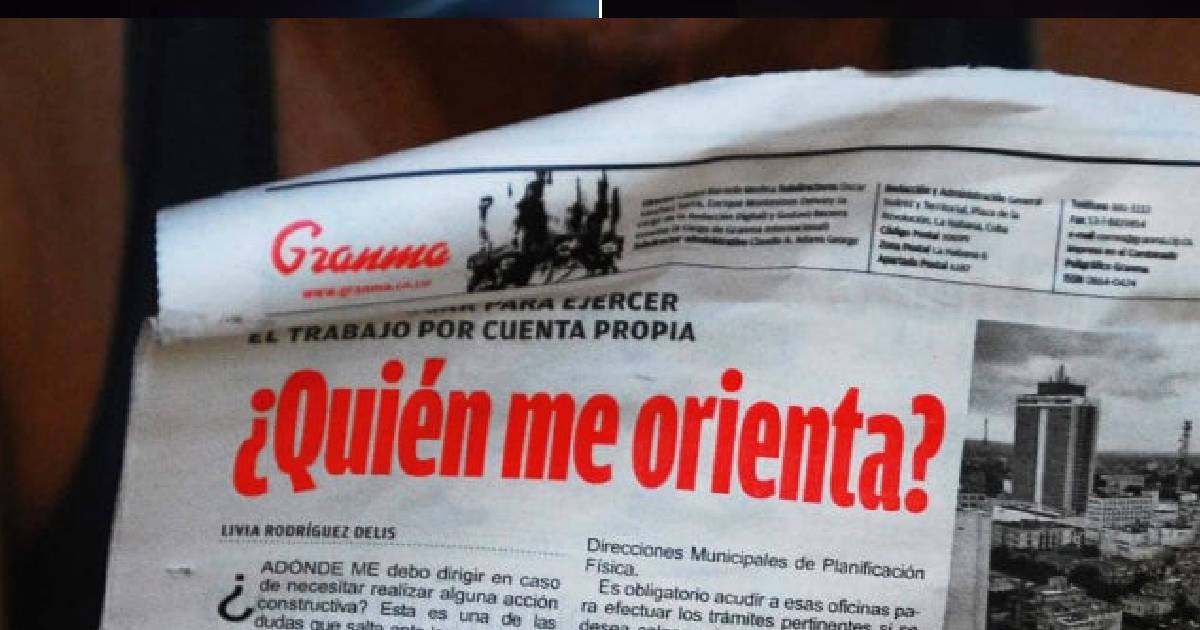
The official newspaper of the Cuban Communist Party, Granma, seemingly made an inadvertent admission regarding the presence of political prisoners on the island—something the regime has staunchly denied for decades. In a post on its official X account (formerly Twitter), the newspaper criticized U.S. diplomat Mike Hammer, accusing him of "sending a thank-you audio to a political prisoner related to the July 11th cause, reaffirming his commitment to the freedom of political prisoners in Cuba."
This unexpected acknowledgment quickly caught the attention of netizens. Many pointed out what they considered to be a revealing slip, as the Cuban government publicly insists that there are no political prisoners, only "individuals sanctioned for common crimes." Predictably, the regime swiftly deleted the post and replaced it with one asserting that "those detained for the July 11th vandalism were lawfully tried for committing crimes against public order."
Despite this hasty correction, the original message left behind numerous comments condemning the regime for violating the rights of Cubans. One user remarked, "Look at that, you just admitted there are political prisoners in the island prison," while others noted, "It was about time you admitted the obvious."
Implications of the Inadvertent Statement
The phrase, which included the term “political prisoners in Cuba,” has been interpreted as an implicit confirmation of something that activists, international NGOs, and democratic governments have long alleged: the existence of hundreds of individuals imprisoned for political reasons, particularly following the massive protests on July 11, 2021.
The Cuban government has consistently denied having prisoners of conscience or political detainees, labeling those arrested during the protests as "vandals," "mercenaries," or "common criminals." The blunder comes amid a war of words between Cuban officials and the head of the U.S. Mission in Havana, Mike Hammer, who recently condemned the repression on the island, declared the revolution a failure, and called for the immediate release of the July 11th detainees.
Documented Cases of Political Detainees
Organizations such as Prisoners Defenders, Amnesty International, and Human Rights Watch have compiled lists with names, ages, and sentences of those imprisoned for political reasons in Cuba. Currently, it is estimated that over 1,000 individuals are incarcerated for issues related to peaceful protest, freedom of expression, and dissent.
Frequently Asked Questions about Political Prisoners in Cuba
What was the content of the controversial post by Granma?
Granma's post criticized U.S. diplomat Mike Hammer and mentioned his support for political prisoners in Cuba, which was seen as an inadvertent admission of their existence.
How did the Cuban government react to the post?
The Cuban regime quickly deleted the original post and replaced it with a statement asserting that those detained were tried for crimes against public order.
What do international organizations say about political prisoners in Cuba?
International organizations such as Prisoners Defenders, Amnesty International, and Human Rights Watch have documented cases of political prisoners, highlighting the regime's violation of human rights.