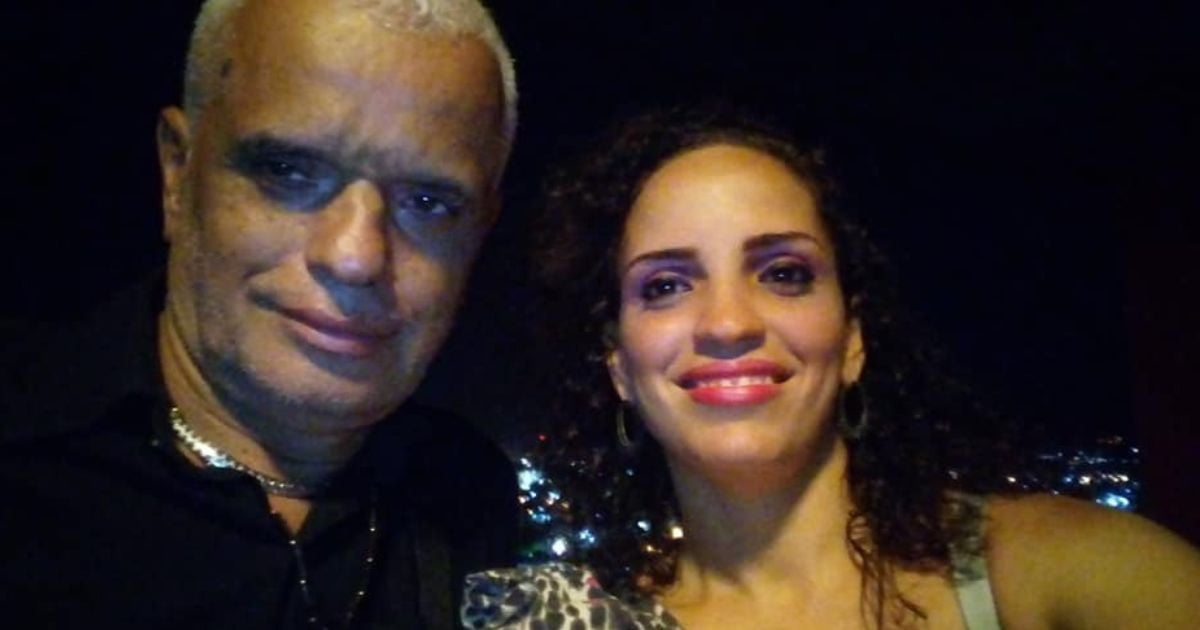
This Tuesday, a public complaint circulating on social media accuses the Miguel Matamoros Music and Entertainment Marketing Company in Santiago de Cuba of institutional mistreatment towards renowned artist Ricardo Peral Alonso, director of the Modelos Andante company, which has been part of the state system for over two decades. The complaint was posted on Facebook by activist Daniela Peral, the artist's daughter. She asserted that her father's company has been listed in the company's catalog for over 20 years without fulfilling basic commitments such as promotion, contracting, advising, and providing minimum conditions for artistic performances.
"What kind of company does this?" Peral questioned. “Practically none, yet the percentage agreed upon between the artistic unit and the company depends on this management,” she added. Regarding Modelos Andante, she claimed that even monthly payments are not made on time, which she sees as evidence of institutional decay.
Allegations of Verbal Abuse
The situation reportedly worsened on Monday when, according to Daniela Peral's account, the company’s director, Rosa María Prades Bell, allegedly shouted, humiliated, and threatened the artist, demanding he sign a new income percentage that was allegedly imposed arbitrarily. Peral claimed that her father left the premises after being verbally abused, in a place that, as she put it, should protect his rights as a creator.
The activist described the official's reaction as an abuse of power, clarifying that they are not seeking a personal conflict but rather the defense of rights owed to them as artists. "Don't think this will become a petty or personal war; we have the right, even if you believe you are above the law," she warned.
Calls for Institutional Reform
Peral defended her father's legacy and what Modelos Andante represents for Santiago's culture: "It is the only show that still remains in (his) company, and it is not thanks to her; it is due to the perseverance and dedication of its director, who has been there longer than you and does not deserve to be mistreated by anyone.” She concluded with a phrase filled with pain and protest: “The pure artist has not died; you are killing them. Santiago artists, how long will you remain silent?”
So far, the Miguel Matamoros Music and Entertainment Marketing Company has not issued any public statement on social media regarding these allegations. However, several individuals have reacted to this complaint. Among them, activist Lara Crofs, whose real name is Yamilka Lafita, expressed on social media that the Miguel Matamoros Music and Entertainment Marketing Company is failing in its obligations towards the Modelos Andante Company, and in its duty to represent, promote, and ensure dignified conditions for its artists.
Widespread Artist Support
She also denounced that its director, Rosa María Prades Bell, "humiliated and shouted at Ricardo Peral Alonso, the company director, under threats and abusing her power." In her message, Crofs declared: “Enough of the institutional mistreatment of art and artists in Santiago de Cuba!” and defended the artist’s legacy: “Ricardo Peral Alonso needs no defense: his work and legacy defend themselves.”
Producer Daya Prieto also resonated with the complaint, recalling her own experiences with the Holguín Music and Entertainment Marketing Company (EPCME). "It was many years of battling... The same problems, the same violations. That institution should have ceased to exist years ago... it serves no purpose, provides nothing, represents or markets nothing," she expressed.
Prieto denounced the abusive nature of the system, which she described as “a destructive creation machine and a scam by nature,” and recalled the mistreatment suffered by her father, a recognized singer-songwriter, whom the company, she recounted, treated with disregard until his last days. “Payments to the ONAT were always disproportionate to the income. My father's posthumous pension, after more than 30 years of work, is a thousand Cuban pesos,” she detailed.
Broader Context of Institutional Abuse
Despite mentioning that there were committed directors at some point, she asserted that her overall experience with the entity left “bitter memories.” Meanwhile, Yasmani Castro Caballero publicly highlighted the trajectory and impact of Ricardo Peral Alonso on Santiago de Cuba’s cultural life. “I am aware of your father’s worth and how important he has been for the cultural development of that city. He perseveres against all odds,” he affirmed.
Castro also expressed hope for a favorable resolution to the situation: “I hope this dilemma has a happy ending.” Photographer Rubén Aja Garí also joined the reactions, recalling the essential role of creators in the cultural fabric of the country. “Sometimes we forget that directors come and go, but artists and their work remain... Institutions exist because of the artists, not the other way around,” he wrote.
Aja criticized the attitude of some officials who, instead of supporting creation, discourage artistic initiative: “We know of institutions where officials tell artists: ‘don’t get creative’... What a ridiculous statement,” he concluded.
Another voice that joined the reactions was artist Dialexis Palacio, who deeply lamented the treatment that creators receive within the Cuban institutional system. “It is unfortunate the mistreatment we artists suffer. Ineptitude, abuse, and trivialities are signs of the so-called ‘human miseries,’” he expressed.
Palacio emphasized that music companies exist because of the artists, not the other way around, and launched a critical reflection on the abandonment many creators feel: “Let culture save us, because we have no support from anyone.” The artist Jorge Castillo Rodríguez also expressed his support for Ricardo Peral Alonso and the Andante company, with which he claimed to have a personal and artistic bond since its inception.
“I stand in solidarity with any cause in favor of ‘Andante’, which practically arose in the environments of my walks. I also know well that humble artist Ricardo Peral Alonso, very prudent and professional,” he noted. Castillo lamented the current context faced by performers in Santiago de Cuba and shared his own experience of institutional mistreatment: “The chapters that Ricardo and his ‘Andante’ are living today, I have lived in my own life. The difference is that those who speak out get doors closed sooner.”
In various regions of the country, complaints accumulate depicting the arbitrary behavior of Cuban state entities toward citizens who demand their rights or simply express their identity. For instance, in Santiago de Cuba, Jorge L. Veranes Vera, a custodian with 14 years of experience at the H-2 cafeteria in the José Martí District, had not received his salary since November 2024.
The cafeteria, under the Municipality's Gastronomy Company and serving as part of the Family Care System (SAF), maintained its operations and product sales, but revenues did not translate into payment for those sustaining the service. One such case occurred when a young man was expelled from a Palmares state cafeteria in Ciego de Ávila simply for dressing differently. The discriminatory treatment included insults and derogatory remarks, highlighting the lack of institutional protocols for respecting diversity.
Another account tells the story of a Cuban who, after being victimized by homophobic harassment in various institutions, was systematically marginalized from different workplaces. The entities involved not only failed to act but participated in or covered up the events, consolidating a power structure that punishes difference and silences internal complaints. The situation is not exclusive to one sector. In Guantánamo, a trans woman was expelled from a state establishment for “not meeting the female profile” the place required of its female clients.
Understanding Institutional Challenges for Cuban Artists
What are the main allegations against the Miguel Matamoros Music and Entertainment Marketing Company?
The company is accused of institutional mistreatment and failing to fulfill its commitments to artists, such as promotion and fair compensation. There are also allegations of verbal abuse by its director, Rosa María Prades Bell, towards artist Ricardo Peral Alonso.
How have artists and activists reacted to these allegations?
Many artists and activists have expressed support for Ricardo Peral Alonso and criticized the company's actions. Some have shared their own experiences of institutional abuse, calling for reform and greater respect for artists' rights.
What broader issues do these allegations highlight in Cuba?
These allegations underscore systemic issues within Cuban state entities, including arbitrary behavior, neglect of artists' rights, and a lack of support for creative expression. They point to a broader pattern of institutional abuse across various sectors.