Is there religious freedom in Cuba?
- Submitted by: admin
- Caribbean
- culture an traditions
- national
- Religion
- Politics and Government
- 05 / 18 / 2009
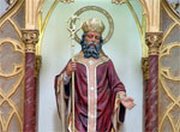
That way, the presence of slaves from the Yoruba tribe gained ground in Cuba's incipient social structure at the time, contributing their religion and especially, their gods, which are called Orishas.
Throughout Cuba's history, the slaves identified their deities with Catholic saints, a process that, according to experts, led to a sort of religious syncretism known as Santería.
In Santería, the life of each person is supervised by a specific god or Orisha, which plays an active role in that process, in a combination of Catholic and African beliefs.
Santería rites are controlled by priests called "babalawos", who are consulted regularly for advice to solve specific problems, cure diseases or seek protection.
The offerings consist of food, fruit, cigars, rum and herbs that are placed before a small altar in the babalawo's house, amid rituals that include animal sacrifices.
Although the images of Catholic saints worshiped in the altars represent the Orishas, their true power is in the necklaces of multicolored-beads, as there exists the belief that the beads keep the spirit of the deities.
The initiated often receive five such necklaces, which belong to Elegguá, Obatalá, Shangó, Yemayá and Oshún, and which offer protection against the evil.
Like in Catholicism, believers of the Yoruba religion must follow a series of commandments known as the 16 Laws of Ifá, whose origin is attributed to the pronouncements made by Orunmila, the Orisha of wisdom and prediction.
The aforementioned laws prohibit saying what you don't know, following unknown rites and leading people on false roads. They also command to be humble, keep the sacred instruments clean and respect the weak and the moral laws.
The commandments also prohibit betraying a friend and revealing secrets, and command to respect hierarchies and the elder, and not to pretend to be wise when you are not.
Generations of descendants of the first African slaves who arrived in Cuba have kept the Yoruba religion alive, attracting foreign visitors who consider it a key element of Cuban culture.
(DTCuba)
Comments